Der Kollege oder der Auftragnehmer: Was Claude Code und ChatGPT Codex Ihrem Unternehmen wirklich sagen

Auf den Punkt
- Claude Code ist der Kollege: interaktiv, repo-nah und stark bei mehrdeutiger Architektur, Legacy-Systemen und Refactors mit Urteil.
- ChatGPT Codex ist der Auftragnehmer: cloudbasiert, asynchron und stark bei klar beschriebenen Backlog-Aufgaben, die als Pull Requests geprüft werden können.
- Ernsthafte Teams nutzen beides: Codex arbeitet definierte Aufgaben in großem Umfang ab, Claude Code bleibt bei Architektur und Kontextentscheidungen im Loop.
Zwei Tools. Zwei Philosophien.
Es gibt einen Moment, den Haruto Tanaka, Engineering Lead bei einem mittelgroßen Fintech-Startup, auf eine Weise beschreibt, die bei ihm haftenblieb. Es war 17:31 Uhr an einem Freitag. Ein Produktionsfehler war gemeldet worden — eine fehlerhafte Datenpipeline, die still einen kleinen Prozentsatz von Transaktionsdatensätzen korrumpierte. Sein Team war bereits offline. Er öffnete ChatGPT, navigierte zum Codex-Agenten, verband ihn mit dem GitHub-Repository, tippte eine zweiteilige Problembeschreibung und klappte seinen Laptop zu.
Montagmorgen: Ein Pull Request wartete auf seine Überprüfung. Die Pipeline war repariert. Die Tests liefen. Codex hatte die Ursache identifiziert — einen Off-by-One-Fehler in einer Batch-Processing-Schleife — einen Patch geschrieben, die Test-Suite in einer isolierten Cloud-Sandbox ausgeführt, den Fix bestätigt und den PR mit einer klaren Beschreibung geöffnet, was geändert wurde und warum. Niemand wurde geweckt. Niemand musste es werden.
Eine andere Engineering-Leiterin bei einem anderen Unternehmen erzählt eine andere Geschichte. Ihr Team hatte eine Codebase mit 11 Jahren angehäufter Entscheidungen geerbt, die übereinandergeschichtet waren — einige gut, einige unerklärlich. Sie öffnete Claude Code in ihrem Terminal, beschrieb, was sie verstehen wollte, und verbrachte die nächsten drei Stunden damit, mit ihr zu arbeiten: Fragen zu stellen, warum Module so strukturiert waren, wie sie waren, Abhängigkeitsketten zu verfolgen, einen Refactor vorschlagen zu lassen, während sie gegen die Teile drückte, die sich falsch anfühlten. Als sie fertig war, verstand sie die Codebase besser als jeder in ihrem Team. Und der Refactor war richtig — nicht nur technisch korrekt, sondern richtig für diese Codebase, diese Abwägungen, dieses Team.
Das sind nicht zwei Geschichten über ein besseres oder schlechteres Tool. Es sind zwei Geschichten über zwei völlig unterschiedliche Arbeitsbeziehungen. Und die Frage im Herzen des Claude Code vs. ChatGPT Codex-Vergleichs lautet nicht „welches ist klüger?" — sondern „welche Beziehung wollen wir eigentlich?"
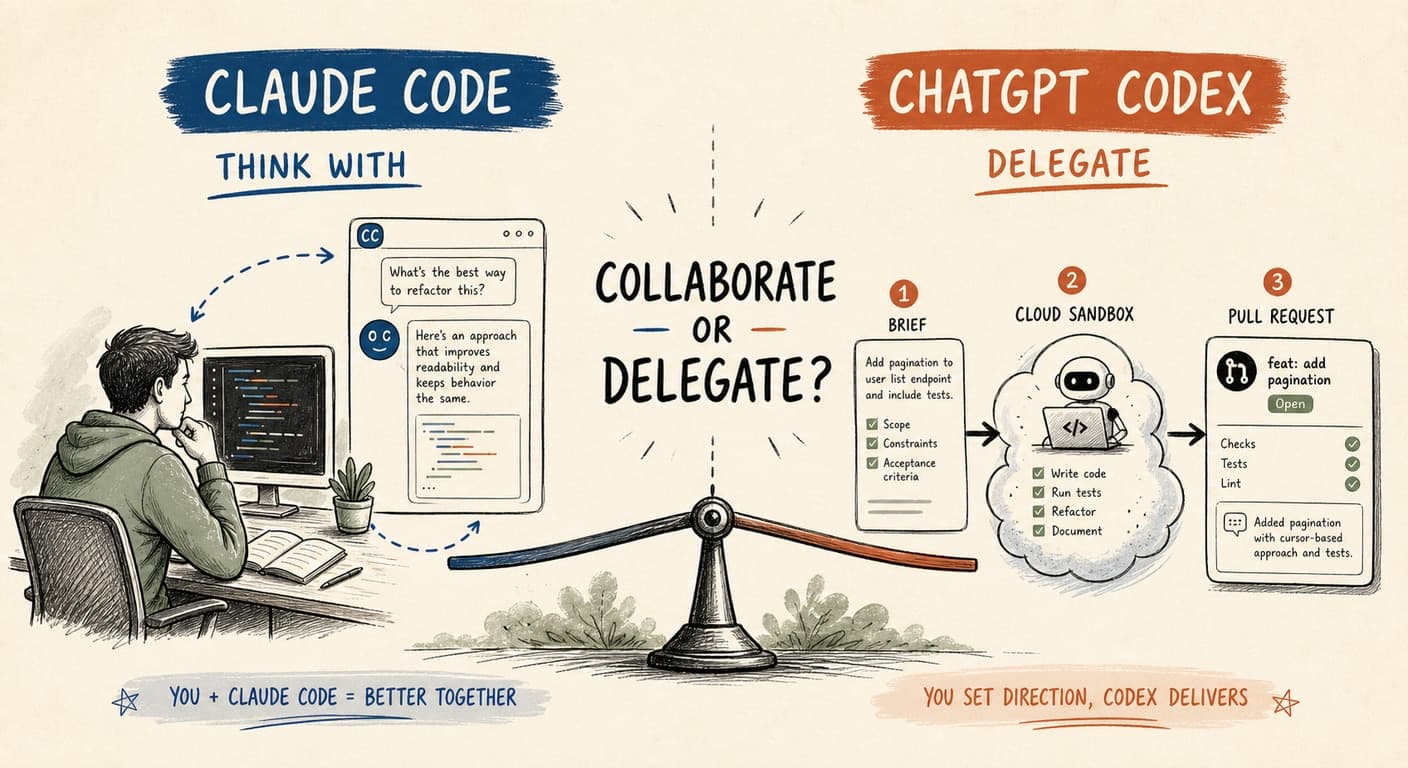
Die Kurze Antwort: Claude Code ist der KI-Kollege, mit dem Sie denken — am besten für komplexes, urteilsintensives Coding, bei dem der Entwickler im Loop bleibt. ChatGPT Codex ist der KI-Auftragnehmer, dem Sie ein Briefing geben und dem Sie vertrauen, zu liefern — am besten für gut spezifizierte Aufgaben, die Sie asynchron erledigt haben möchten. Die meisten Teams brauchen beide, für unterschiedliche Momente.
Claude Code vs. ChatGPT Codex: Die Frage hinter dem Vergleich
Der Standardvergleich zwischen Claude Code und ChatGPT Codex geht so: Eines wird von Anthropic entwickelt, eines von OpenAI. Eines lebt in Ihrem Terminal, eines hat einen Cloud-Agenten. Hier sind ihre Benchmark-Scores. Hier ist die Preistabelle.
All das ist wahr und fast alles ist nebensächlich.
Die Frage, die für Unternehmen wirklich zählt, ist: Wollen Sie zusammenarbeiten oder delegieren?
Claude Code wurde um Zusammenarbeit herum gebaut. Es lebt in Ihrem Terminal. Es liest Ihre Codebase in Echtzeit. Sie führen es. Es stellt klärende Fragen, wenn die Aufgabe zweideutig ist. Es schlägt Änderungen vor, erklärt seine Begründung und wartet darauf, dass Sie ihm sagen, fortzufahren. Der Entwickler ist nie aus dem Loop — weil die gesamte Prämisse des Tools ist, dass der Loop der Ort ist, wo der Wert liegt.
ChatGPT Codex wurde um Delegation herum gebaut. Seine leistungsstärkste Form ist ein Cloud-basierter Agent, der in einer isolierten Sandbox-Umgebung läuft, mit Ihrem Repository vorgeladen, und Aufgaben asynchron verarbeitet, während Sie etwas ganz anderes tun. Sie schreiben ein Briefing. Es arbeitet. Es kommt mit einem Pull Request zurück. Der Entwickler überprüft den Output — aber er war nie Teil des Prozesses.
Ein Tool sagt: Bleiben Sie hier bei mir, während wir das herausfinden. Das andere sagt: Ich erledige es, schauen Sie später nach. Beide sind die richtige Antwort — für völlig unterschiedliche Situationen.
Wie Claude Code und ChatGPT Codex tatsächlich aufgebaut sind
Claude Code vs. ChatGPT Codex: Direkt im Vergleich
| Claude Code | ChatGPT Codex | |
|---|---|---|
| Entwickelt von | Anthropic | OpenAI |
| Wo es läuft | Ihr Terminal (lokal) | Cloud-Sandboxen |
| Arbeitsstil | Kollaborativ — Entwickler im Loop | Autonom — Entwickler überprüft Output |
| Am besten für | Architekturarbeit, Legacy-Codebases, mehrdeutige Probleme | Gut spezifizierte Aufgaben, Backlog-Abbau, nächtliche Automatisierung |
| GitHub-Integration | Über GitHub Agent HQ | Über GitHub Agent HQ (nativ) |
| Preis (2026) | 20 €/Monat Pro, 100 €/Monat Max | 20 €/Monat (Plus), 25 €/Nutzer (Business) |
| Datenresidenz | Code verarbeitet von Anthropic API | Code läuft in OpenAI Cloud-Sandboxen |
| Modell | Claude Sonnet / Opus | GPT-5 High / Codex 1 (o-Serie) |
Der Entwickler, der neben Ihnen arbeitet (Claude Code)
Claude Codes Architektur beginnt mit einer einzigen Überzeugung: Das beste KI-Coding-Tool ist eines, das das gesamte Problem versteht, bevor es irgendetwas berührt.
Wenn Sie Claude Code in Ihrem Terminal öffnen und es auf ein Repository richten, schaut es nicht nur auf die Datei, an der Sie arbeiten. Es kartiert das gesamte Projekt — verfolgt Abhängigkeiten, liest Namenskonventionen, folgert die Architekturmuster, auf die sich das vorherige Team geeinigt zu haben scheint, aber die es nie aufgeschrieben hat. Alles, was es über die Funktionsweise Ihrer Codebase weiß, wird in einer CLAUDE.md-Datei kodiert, die in Ihrem Projekt-Root liegt: Code-Stil, Test-Konventionen, bevorzugte Muster, die Bibliotheken, die Sie verwenden, die, die Sie nicht verwenden. Jede Session liest Claude Code diese Datei, bevor es irgendetwas tut. Es ist, in Wirklichkeit, ein Selbst-Onboarding bei jeder Gelegenheit.
Das Modell darunter ist Anthropics Claude — speziell Claude Sonnet für die meisten Aufgaben, Opus für die schwierigsten. Claudes Training hat etwas betont, das in agentischen Kontexten enorm wichtig ist: Instruction Following. Wenn Sie Claude Code sagen, einen Service zu refaktorieren, aber die öffentliche API unverändert zu lassen, lässt es die öffentliche API unverändert. Wenn autonome Tools Amok laufen und „hilfreich" angrenzende Probleme beheben, die Sie nicht angefordert haben, erzeugen sie Überraschungen, die Senior Engineers bereinigen müssen. Claude Codes Eindämmung ist keine Einschränkung. Für ein Unternehmen mit Produktionssystemen ist es ein Feature.
Der Entwickler, der arbeitet, während Sie schlafen (ChatGPT Codex)
ChatGPT Codex' Architektur beginnt mit einer anderen Überzeugung: Das Wertvollste, was KI für ein Unternehmen tun kann, ist, Menschen davon zu befreien, jeden Schritt überwachen zu müssen.
Der Codex-Agent läuft in isolierten Cloud-Sandboxen — auf Anfrage hochgefahrene virtuelle Umgebungen, mit Ihrem GitHub-Repository vorgeladen, hermetisch von Ihrer restlichen Infrastruktur abgeschirmt. Sie senden eine Aufgabe über die ChatGPT-Oberfläche oder die CLI. Codex analysiert die Aufgabe, erkundet die relevanten Teile der Codebase, schreibt Code, führt Tests aus, iteriert bei Fehlern, und wenn es sicher ist, dass die Aufgabe erledigt ist, öffnet es einen Pull Request mit einem vollständigen Protokoll jeder Aktion, die es durchgeführt hat.
Das Modell, das es antreibt, ist GPT-5 High (oder das Codex 1-Modell, je nach Aufgabe). OpenAIs o-Serie-Modelle wurden speziell für tiefes Reasoning trainiert — sie denken länger, bevor sie handeln, was bei komplexen algorithmischen Aufgaben und Problemen wichtig ist, die mehrstufige Deduktion erfordern. Die Reinforcement-Learning-Komponente trainierte sie speziell dazu, sich wie Software-Engineering-Agenten zu verhalten: nicht nur Code-Generatoren, sondern Problemlöser, die den vollständigen Bogen einer Aufgabe vom Issue bis zum gemergten PR verstehen.
Drei Szenarien: Wann Claude Code vs. ChatGPT Codex verwenden
Das Erbschaftsproblem
Ein Team übernimmt eine Legacy-Codebase. Sie umfasst 200.000 Zeilen. Die ursprünglichen Entwickler sind weg. Es gibt fast keine Dokumentation, drei große Frameworks — eines davon veraltet — und ein Custom ORM, das jemand 2018 aus Gründen gebaut hat, die nicht mehr klar sind.
Das ist ein Claude-Code-Szenario. Der Refactor wird erfordern zu verstehen, warum die Dinge so aufgebaut wurden, wie sie sind — nicht nur was sie tun, sondern die dahinterstehende Absicht. Es wird einen Entwickler erfordern, der auf eine Architekturentscheidung von vor sechs Jahren schauen und urteilen kann, ob sie beabsichtigt oder zufällig war. Claude Codes Langkontext-Kohärenz — die Fähigkeit, eine gesamte Codebase im Geist zu halten und über sie als System nachzudenken — ist genau das, was dieses Problem braucht.
Delegation funktioniert am besten, wenn das Ergebnis im Voraus spezifizierbar ist. „Diesen Service von Callbacks auf async/await migrieren" ist delegierbar. „Diese Codebase besser machen" ist es nicht.
Das Backlog, das sich nie leert
Ein Produktteam bei einem B2B-SaaS-Unternehmen hat eine laufende Liste von 47 Issues mit dem Tag „good first issue" — kleine Bugs, kleinere Feature-Requests, Test-Coverage-Lücken, Dokumentationslöcher. Jeden Sprint meint das Team, einige davon abzuarbeiten. Jeden Sprint nimmt die eigentliche Produktarbeit Vorrang ein.
Das ist ein Codex-Szenario. Jedes Issue ist gut definiert, begrenzt und verifizierbar — entweder der Test besteht oder nicht, entweder der Bug ist behoben oder nicht. Keines erfordert tiefes Architektururteil. Sie erfordern nur kompetente, sorgfältige Ausführung.
Ein Team, das Codex jede Nacht auf fünf dieser Issues setzt, kommt jeden Morgen mit fünf PRs zur Überprüfung an. Das Überprüfen geht schnell, weil die Issues klein und die Change Logs klar sind. Das Backlog schrumpft. Die Moral des Teams verbessert sich. Und kein Senior Engineer musste den Kontext in einen 20-Zeilen-Bugfix wechseln, während er mitten in etwas war, das ihn wirklich braucht.
Der Geschäftsfall: Kosten, Sicherheit und GitHub-Integration
Kostenstruktur prägt Verhalten. Claude Code auf individueller Ebene kostet 20 €/Monat für den Pro-Plan, 100 €/Monat für den Max-Plan oder 150 €/Monat pro Premium-Seat in einem Team-Plan. Codex ist in ChatGPT Plus für 20 €/Monat gebündelt, mit Business-Plänen zu 25 €/Nutzer/Monat. Die Wirtschaftlichkeit sieht auf dem Papier ähnlich aus — aber die versteckten Kosten von Claude Code sind die Entwicklerzeit im Loop. Die versteckten Kosten von Codex sind die Zeit für das Überprüfen von PRs und das Auffangen der Dinge, die der autonome Agent subtil falsch gemacht hat.
Sicherheitsanforderungen ändern die Kalkulation. Claude Code arbeitet lokal. Ihr Code geht zur Verarbeitung an die Anthropic API, lebt aber nie in einer fremden Cloud-Sandbox. Für Teams mit strengen Datenhaltungsanforderungen — Finanzdienstleistungen, Gesundheitswesen, alles Compliance-intensive — ist das wichtig. Das Cloud-Sandbox-Modell von Codex ist technisch isoliert, aber Code verlässt Ihre Umgebung. Beide bieten Enterprise-Datenverarbeitungsrichtlinien — aber die Frage ist, ob Ihre Rechtsabteilung sie geprüft hat.
Das Entscheidungs-Playbook: Claude Code vs. ChatGPT Codex
ChatGPT Codex ist der Auftragnehmer, dem Sie ein Briefing geben und dem Sie vertrauen, zu liefern. Es funktioniert am besten, wenn Sie wissen, was Sie wollen, es klar spezifizieren können und komfortabel sind, den Output zu überprüfen, ohne Teil des Prozesses zu sein. Es glänzt bei gut definierten Aufgaben, asynchronen Workflows und Teams, die den Durchsatz steigern wollen, ohne den Kopfstand zu vergrößern.
Claude Code ist der Kollege, mit dem Sie denken. Es funktioniert am besten, wenn das Problem komplex, mehrdeutig ist oder ein Verständnis erfordert, das sich durch Iteration entwickelt. Es glänzt bei Architekturarbeit, Legacy-Systemen und jeder Situation, in der der Entwickler im Loop zu sein nicht ein Kostenpunkt, sondern ein Feature ist.
Verwenden Sie beide, wenn Sie ein ernsthaftes Entwicklungsteam sind. Sie erfüllen unterschiedliche Aufgaben. Verwenden Sie Codex für das Backlog; verwenden Sie Claude Code für die Architektur.
Der Agent für genau diese Aufgabe

Richard
A forward-deployed AI agent that gets your software live and adopted inside every customer.
Richard kennenlernenHäufig gestellte Fragen

Founder, AI Heroes
I build AI companies and the systems inside them. At AI Heroes, we give businesses the functional capacity to grow without the headcount growth normally demands — sales that follows up, marketing that runs, content that ships, ops that handles itself. We audit where you're leaving growth on the table, build the team that captures it, and hand it over completely.
I've built at scale before. Leading product and GTM at SlideSpeak AI (1M+ monthly users, profitable, bootstrapped). CPO at Disperse — the AI construction platform that went from 3 to 200+ people on $35M raised. I also co-founded LOBOMAR, a luxury fashion label featured in Elle, Cosmopolitan, and the LA Times, with shows at the London Design Museum, Wereldmuseum, and Amsterdam Fashion Week.
Ähnliche Artikel

Das Hausschlüssel-Problem: Worum OpenClaw und Claude Code wirklich streiten
Es gibt eine Geschichte über den Moment, in dem OpenClaw für seinen Schöpfer klick machte. Sie handelt von Hausschlüsseln, einem schlafenden Gründer und einem Agenten, der ein Restaurant gebucht hat, ohne gefragt zu werden. Diese Geschichte erklärt noch immer alles — auch jetzt, wo Claude Code begonnen hat, nach einem kleinen eigenen Schlüsselbund zu fragen.

Microsoft Copilot Cowork vs. Claude Code: Die zwei Etagen, die niemand automatisierte
Felix ist CTO und beobachtet, wie seine Ingenieure Pull Requests mit Claude Code liefern — und liest gleichzeitig Microsofts Copilot-Cowork-Ankündigung. Seine VP of Operations möchte wissen: Soll das gesamte Unternehmen wechseln? Die Frage ist falsch. Es gibt zwei Etagen. Es gibt zwei Tools.
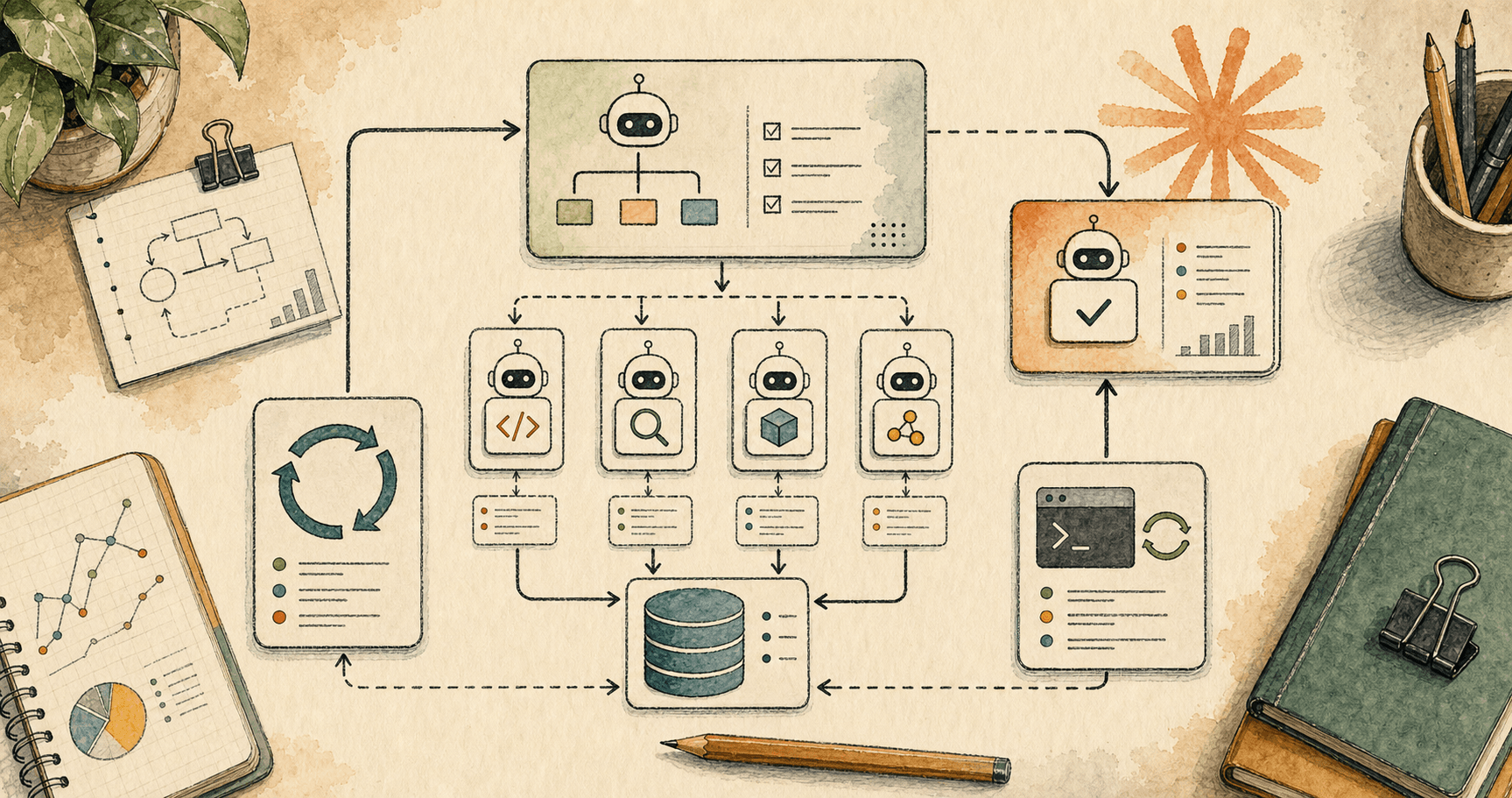
Claude Code Dynamic Workflows: What Is Actually New in 2026?
Claude Code dynamic workflows are not just parallel agents. They turn a prompt into an executable orchestration script that can split work, store intermediate results, cross-check findings and return one synthesised answer.