Claude Code Dynamic Workflows: What Is Actually New in 2026?

TL;DR
- Claude Code dynamic workflows are best understood as generated orchestration scripts, not just "more agents in parallel".
- Parallel coding agents already exist in Codex, Cursor, Devin, GitHub Copilot and other tools; the newer move is that Claude Code can generate, run, inspect and reuse the workflow plan inside the coding runtime.
- The strongest use cases are wide, decomposable engineering jobs: feature-flag audits, migration planning, dependency archaeology, stale-code cleanup, test expansion and multi-agent verification.
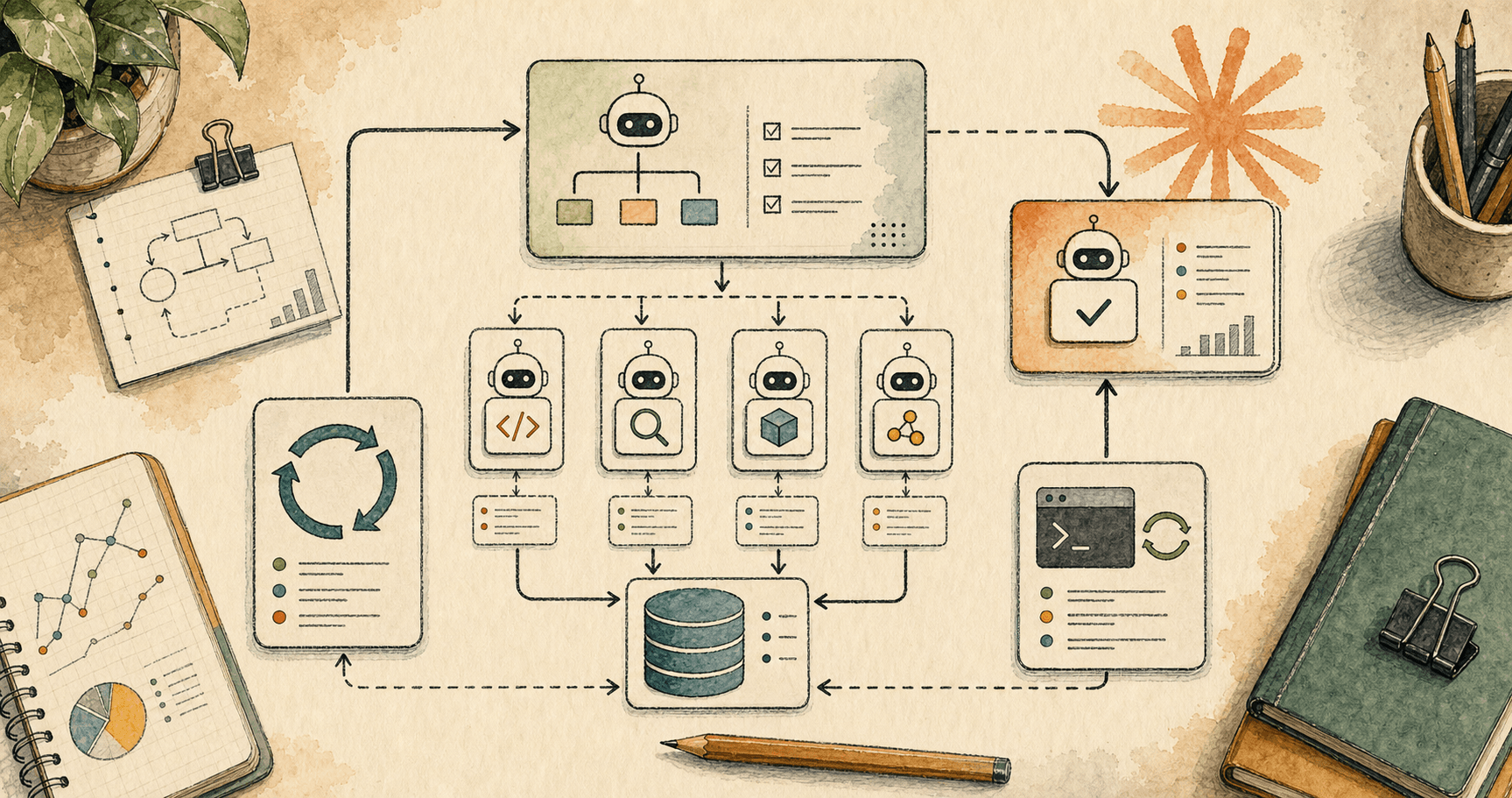
Claude Code dynamic workflows are a research-preview feature that lets Claude turn a broad prompt into an executable orchestration plan. Mention "workflow" in a Claude Code prompt, or use ultracode, and Claude can create a script that coordinates subagents, runs work in parallel, records intermediate findings outside the normal chat thread and synthesises the result.
That makes the feature easy to overhype and easy to underestimate.
It is easy to overhype because parallel AI coding work is not new. OpenAI Codex can work asynchronously on software tasks. Cursor has background agents. GitHub Copilot has a coding agent you can assign issues to. Devin is explicitly sold as an autonomous software engineer. OpenAI's Agents SDK gives developers handoffs, guardrails and tracing for multi-agent workflows.
It is easy to underestimate because dynamic workflows are aiming at a different layer. They are not merely "one more background agent". They move the plan itself into code.
What are Claude Code dynamic workflows?
Claude Code dynamic workflows are generated execution plans that Claude Code can write and run when a task is too broad for a single linear agent loop. The user gives Claude a high-level task, Claude proposes or creates a workflow, and the runtime can coordinate multiple subagents against that plan.
The important word is "workflow".
A normal coding-agent session is conversational. The agent reads files, decides what to do next, edits, tests, reports and waits. A dynamic workflow makes a different bet: some work should be turned into a structured program first. That program can fan out subtasks, keep state, gather evidence, run checks and then produce a single answer.
Anthropic's own documentation frames this as a research preview with real limits. The docs currently describe workflow runs as able to use up to 16 concurrent agents and up to 1,000 total agents. That means "hundreds of agents" should not be read as hundreds all running at once. It means a workflow can break a large job into many agent-sized units while respecting a concurrency cap.
That distinction matters for accuracy and for operations. This is not magic swarm intelligence. It is controlled orchestration.
Why did Cat Wu's A/B-test-flag example matter?
Cat Wu's public example is useful because it is exactly the sort of problem where dynamic workflows make sense: a wide catalogue of small investigations.
She described using dynamic workflows to catalogue hundreds of A/B test flags, identify flags rolled out to 0% or 100%, and create a faster deprecation path for stale flags. Instead of asking Claude Code to inspect each flag one after another, the workflow could split the catalogue across parallel workers and return the useful answer in under 10 minutes.
That is more revealing than a benchmark.
Feature-flag cleanup is not hard in the way algorithm design is hard. It is hard because it is boring, broad and easy to get wrong through fatigue. A human needs to inspect names, owners, rollout states, code references, fallback paths, telemetry and likely deletion risk. A single agent can do that sequentially, but it will be slow. A naive swarm can do it quickly and inconsistently. A workflow gives the job a shape.
The deeper pattern is this:
| Work type | Why a single agent struggles | Why a workflow helps |
|---|---|---|
| A/B-test flag cleanup | Many small checks across code and config | Split by flag group, standardise output, merge candidates |
| Dependency migration | Many packages, owners and test surfaces | Assign packages or modules to subagents |
| Legacy-code archaeology | Many possible entry points | Map areas in parallel, then reconcile findings |
| Test expansion | Repeated but context-sensitive work | Generate candidate tests per module, then verify |
| Security review | Broad surface area with false positives | Separate discovery, exploitation check and remediation advice |
The feature is not only about speed. It is about preserving structure when the work becomes wide.
Is this genuinely new compared with other AI coding systems?
Claude Code dynamic workflows are not completely new if the claim is "AI systems can run work in parallel." That claim has been true for a while.
What appears newer is the combination of four properties in one coding runtime:
- The workflow can be generated from the user's prompt.
- The orchestration plan is represented as executable script-like structure rather than only a chat plan.
- Intermediate results can live outside the main context window and be folded back in.
- The workflow can be saved, inspected and reused when it proves useful.
Most comparable systems have one or two of those properties. Fewer have all four.
How does Claude Code compare with OpenAI Codex?
OpenAI Codex is closest when the task is well-scoped and can be delegated as a background software-engineering job. Codex can take a task, work asynchronously, run in a cloud environment and return code changes or a pull request for review.
That is powerful. It is also a different control surface.
Codex is strongest when the unit of work is a task. Claude Code dynamic workflows are strongest when the unit of work is a system of subtasks. If you already know the issue, Codex-style delegation makes sense: "fix this bug", "add this endpoint", "write tests for this component". If the job is "inspect hundreds of flags and classify the ones safe to deprecate", the work needs an internal operating model before it needs a patch.
OpenAI also has the Agents SDK, which is a serious orchestration layer. It gives developers primitives for agents, tools, handoffs, guardrails and tracing. The difference is who writes the workflow. With the SDK, the developer typically designs the orchestration. With Claude Code dynamic workflows, Claude Code can generate the orchestration for the specific task while staying inside the coding-agent loop.
That is the cleanest comparison:
| System | Best description | Workflow ownership |
|---|---|---|
| OpenAI Codex | asynchronous coding task agent | user briefs task; agent executes |
| OpenAI Agents SDK | developer-built agent workflow framework | developer designs orchestration |
| Claude Code dynamic workflows | coding agent generates an executable orchestration plan | Claude proposes and runs the task-specific workflow |
How does Claude Code compare with Cursor background agents?
Cursor background agents are comparable because they also move coding work out of the foreground editor loop. A team can assign tasks to remote agents and let them work while the developer continues elsewhere.
The difference is not "foreground vs background". Claude Code dynamic workflows can also run long tasks in the background. The difference is granularity. Cursor's background-agent pattern is usually task-level: one background agent per task or branch of work. Claude Code dynamic workflows are orchestration-level: one workflow can create many subagents, define the data each subagent should return, and reconcile the results.
That makes Cursor background agents feel like hiring several contractors. Dynamic workflows feel more like giving one project lead a written operating procedure and permission to staff the work.
Both patterns are useful. They solve different bottlenecks.
How does Claude Code compare with GitHub Copilot coding agent and Agent HQ?
GitHub Copilot's coding agent is strongest because it lives where engineering work already gets assigned: issues and pull requests. If a team wants to delegate a GitHub issue, receive a pull request and keep review inside GitHub, Copilot's model fits the existing workflow.
GitHub Agent HQ pushes the same direction at the platform level: multiple agents become available inside the GitHub work graph rather than forcing every team into one vendor's IDE or terminal.
Claude Code dynamic workflows are less about GitHub-native assignment and more about task decomposition. A Copilot agent can own an issue. A Claude Code workflow can turn one issue into a map of investigations, subagent outputs and verification steps before the final edit even happens.
For teams, that means the two patterns can coexist. GitHub can be the assignment and review surface. Claude Code can be the orchestration layer used for the parts of the work that require broad codebase reasoning.
How does Claude Code compare with Devin and other autonomous software engineers?
Devin-style systems are designed around autonomy. The pitch is that the AI software engineer can take a task, plan, execute, use tools, debug and produce a deliverable with less continuous human steering.
Claude Code dynamic workflows are more conservative in an important way. They do not remove the need for human review. They make the agent's internal project-management layer more explicit.
That is not a weakness. In production engineering, invisible autonomy is often less useful than inspectable coordination. A senior engineer does not only ask, "Can the agent do the work?" They ask, "Can I see how the work was split, what evidence came back, which checks passed, and where the uncertainty remains?"
A workflow that emits structured intermediate results is easier to audit than a single heroic transcript.
What is actually novel here?
The novel part is not that Claude Code can spawn agents. It is that Claude Code can turn a messy request into a structured, executable coordination layer without the user hand-writing the orchestrator.
That matters because most teams do not fail at agent adoption because the model cannot write code. They fail because the work around the model is poorly defined:
- no consistent decomposition;
- no agreed output shape from each subtask;
- no verification step;
- no memory of how a successful process should run next time;
- no distinction between exploration, execution and review.
Dynamic workflows attack that operating problem directly.
The plan stops being a paragraph in the chat. The plan becomes a thing the system can execute.
What should teams use dynamic workflows for first?
Teams should start with wide, reversible, evidence-heavy jobs before they use dynamic workflows for risky production edits.
Good first jobs:
- Catalogue stale feature flags, experiments, environment variables or configuration branches.
- Map a large codebase area before a migration.
- Find duplicated utilities, dead routes, unused components or stale integrations.
- Generate a test-gap report across many modules.
- Run parallel review passes on one proposed change: security, performance, accessibility, regression risk.
Poor first jobs:
- Rewrite a payment flow without human checkpoints.
- Delete hundreds of files based only on agent confidence.
- Run migrations where test coverage is weak and ownership is unclear.
- Replace an incident-response process with an experimental feature.
The safest pattern is "discover in parallel, decide centrally, change with review."
What are the caveats?
Claude Code dynamic workflows are still a research preview, and teams should treat them that way.
The first caveat is cost. Parallel subagents can use substantially more tokens than a normal Claude Code session. The speedup is real when the work is wide, but it is not free.
The second caveat is verification. Parallel work multiplies the number of answers you receive. It also multiplies the number of plausible-but-wrong partial findings if the workflow does not standardise evidence and cross-check results.
The third caveat is governance. Enterprise teams need to decide who can run workflows, which repositories are allowed, what tools can be called, and which tasks require approval before edits happen. Anthropic's docs note enterprise controls, and serious teams should use them.
The fourth caveat is competition. OpenAI, Cursor, GitHub, Devin, Factory, Windsurf and others are all moving toward richer agentic work surfaces. It would be careless to say nobody else has workflows. The durable question is whether the workflow is generated, inspectable, reusable and connected to the actual coding environment where the work happens.
The verdict: is Claude Code dynamic workflows a new category?
Claude Code dynamic workflows are not a new category if the category is "parallel AI agents." That category already exists.
They are a meaningful step if the category is "agentic engineering orchestration." In that category, the important unit is not the agent. It is the workflow the agent can create, run, check and improve.
That is why Cat Wu's A/B-test-flag example is a better explanation than any abstract launch line. Hundreds of tiny checks. One repeatable process. A result in minutes instead of a long sequential investigation.
The next frontier in AI coding is not whether an agent can edit a file. It is whether the system can coordinate the job without losing track of why the job exists.
Dynamic workflows point in that direction.
Authoritative sources
The agent built for this
Richard
A forward-deployed AI agent that gets your software live and adopted inside every customer.
Meet RichardFrequently Asked Questions

Founder, AI Heroes
I build AI companies and the systems inside them. At AI Heroes, we give businesses the functional capacity to grow without the headcount growth normally demands — sales that follows up, marketing that runs, content that ships, ops that handles itself. We audit where you're leaving growth on the table, build the team that captures it, and hand it over completely.
I've built at scale before. Leading product and GTM at SlideSpeak AI (1M+ monthly users, profitable, bootstrapped). CPO at Disperse — the AI construction platform that went from 3 to 200+ people on $35M raised. I also co-founded LOBOMAR, a luxury fashion label featured in Elle, Cosmopolitan, and the LA Times, with shows at the London Design Museum, Wereldmuseum, and Amsterdam Fashion Week.
Related Articles
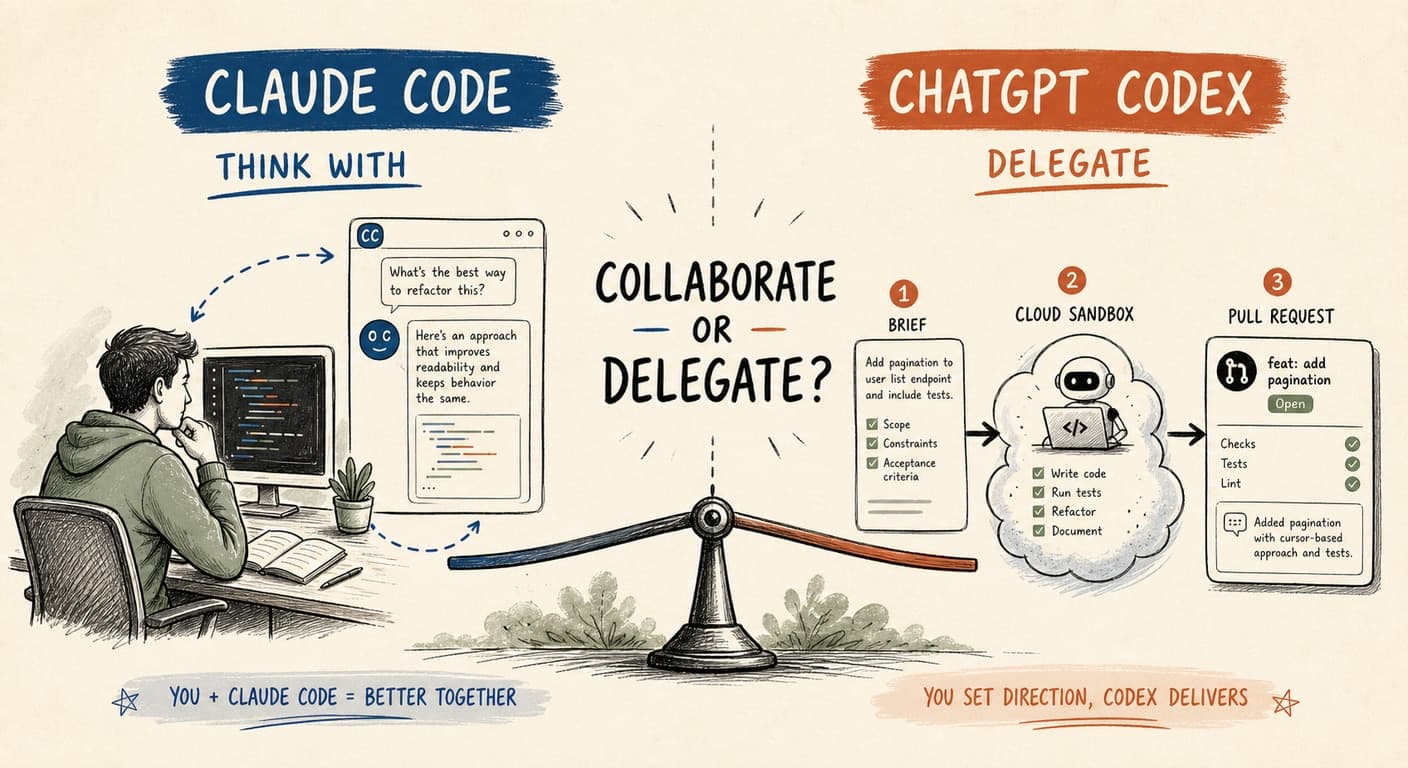
The Colleague or the Contractor: What Claude Code and ChatGPT Codex Are Really Telling Your Business
Two tools. Two philosophies. Haruto closed his laptop at 5:31pm Friday with a production bug unfixed. Monday morning, a PR was waiting. That's ChatGPT Codex. The engineering lead who spent three hours understanding an 11-year-old codebase — and emerged knowing it better than anyone — that's Claude Code. Here's how to tell which problem you actually have.

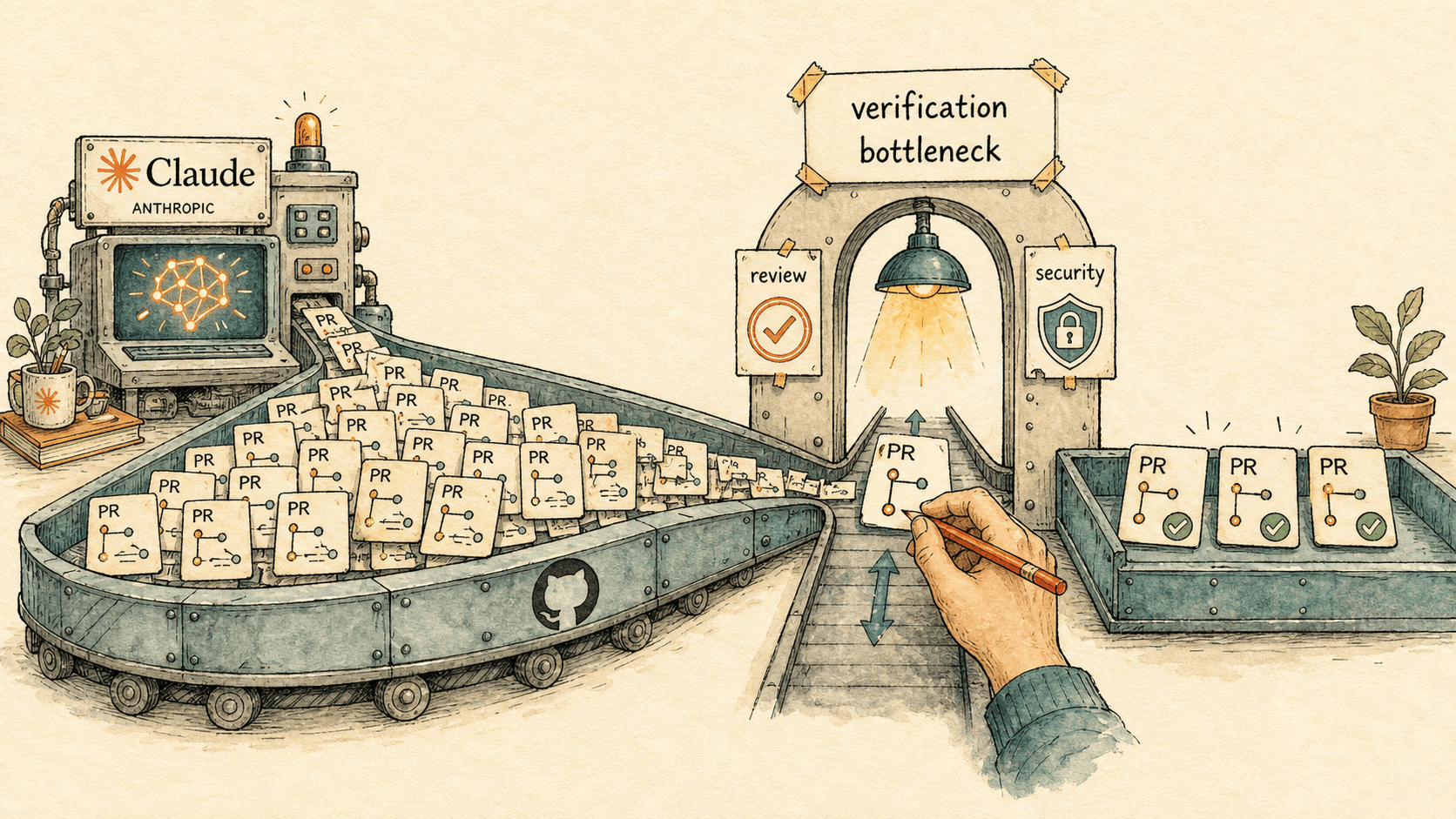
How to Run an AI-Native Engineering Org in 2026
Agentic coding doesn't remove the engineering bottleneck — it moves it from writing code to verifying it. Here's the 2026 operating model for an AI-native engineering organization: the processes to rewrite, how code review changes, and the metrics that prove it's working.
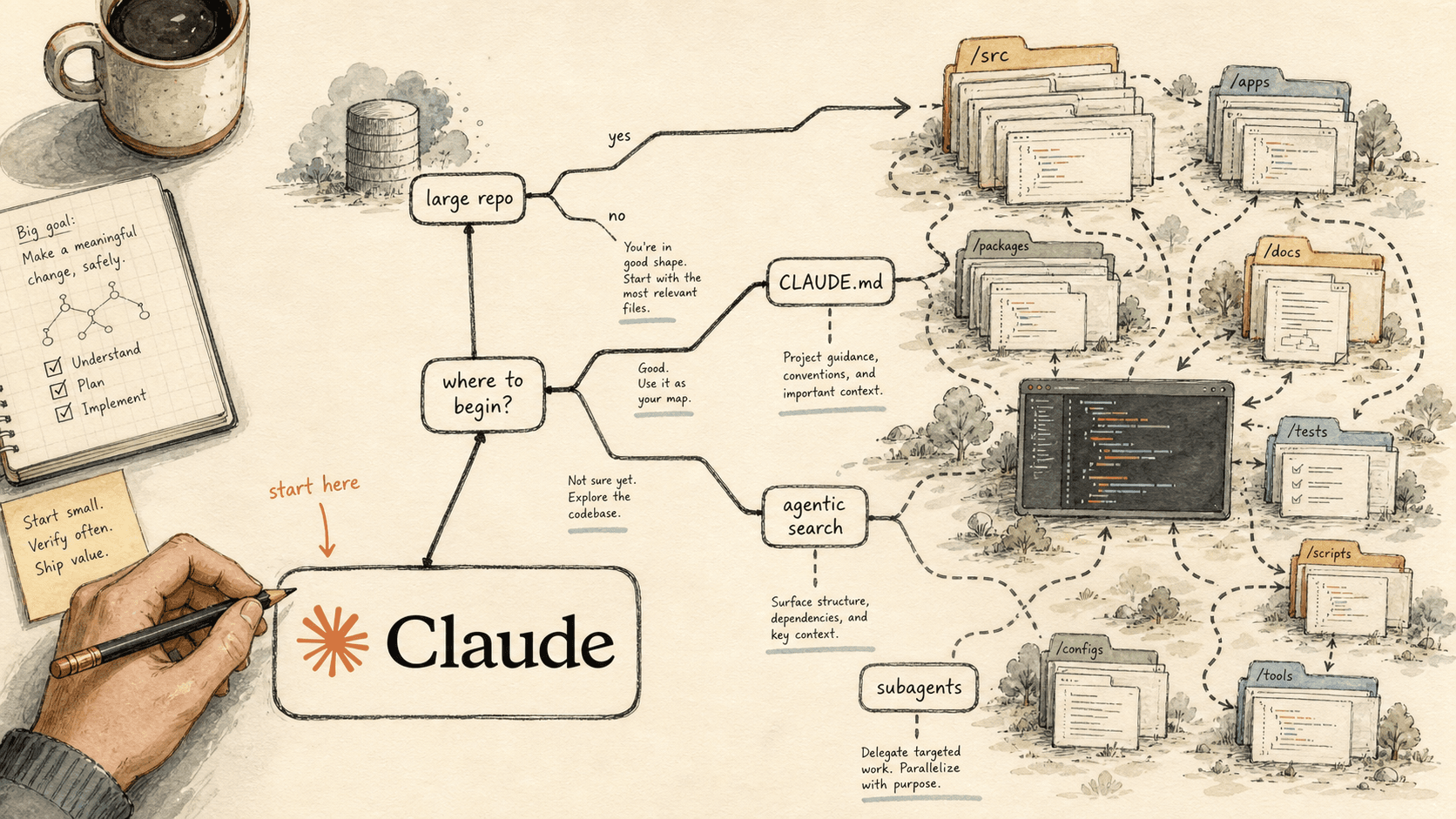
Where to Start With Claude Code in a Large Repo: A Decision Tree (2026)
You do not start a large Claude Code rollout by configuring everything. You start with the one mechanic your repo shape and your actual pain point demand — and ignore the rest until you hit them. This is the decision layer that runs before the build.