You're Tracking AI Search Visibility. Who's Actually Fixing It?

TL;DR
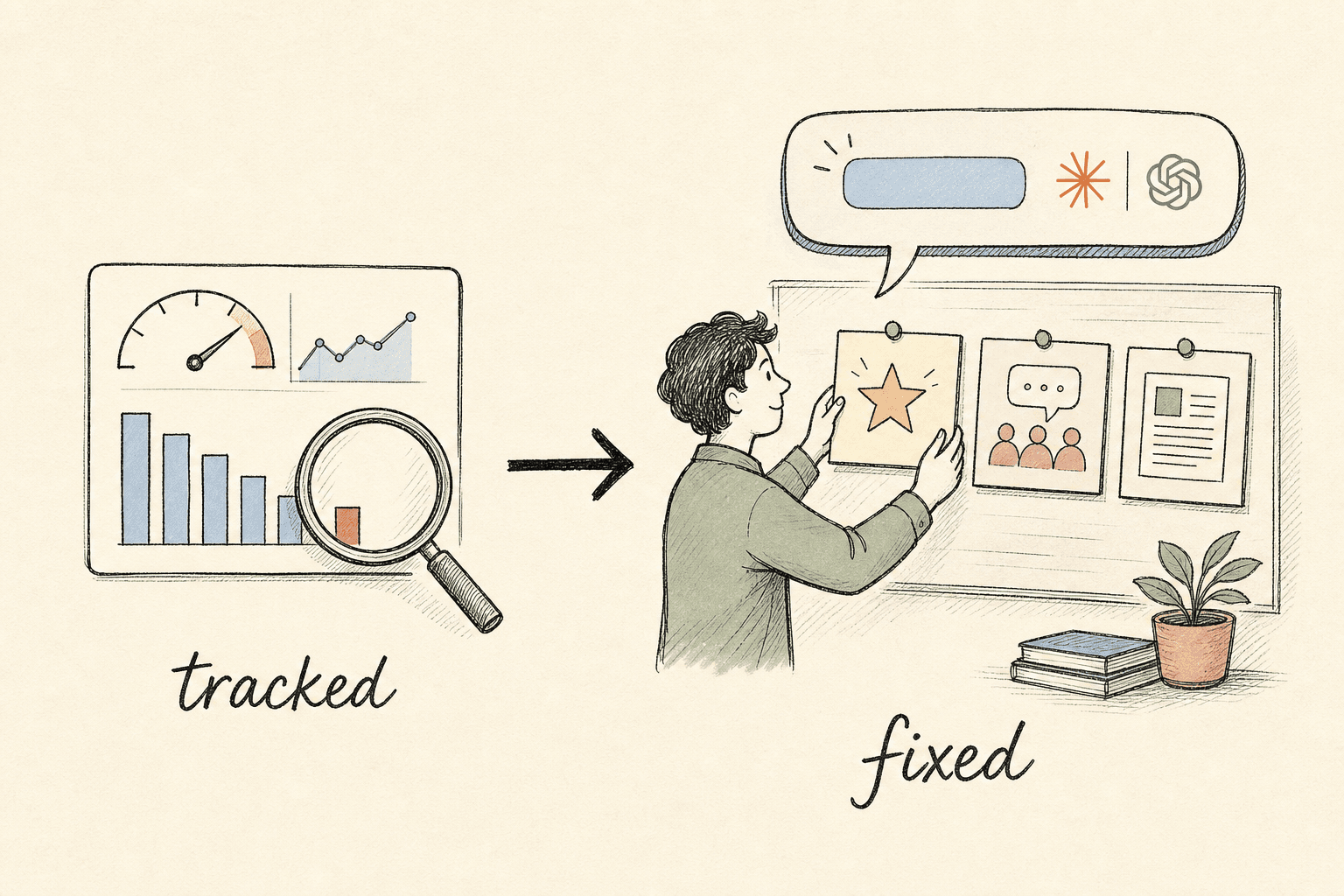
- AI search visibility tools (Peec, Profound, and the rest) tell you where your brand is missing from ChatGPT, Perplexity and Google AI Overviews. They don't change the answer — they measure it.
- The number moves when you do the work the dashboard implies: rebuild pages into citable shape, earn third-party mentions, show up in the communities engines read, and keep it fresh. Most of that happens off your own website, and most of it is recurring.
- That's why "we bought a tool and visibility didn't improve" is the most common AI-search complaint in 2026. The gap isn't data. It's execution capacity.
- AI Heroes closes that gap with an AI-search agent (Schmitdy) plus human review — the layer that turns the dashboard's recommendations into shipped work.
What does "AI search visibility" actually measure?
A visibility platform runs the prompts your buyers ask — "best identity verification API," "Profound alternatives," "how do I reduce payroll errors" — across ChatGPT, Perplexity, Google AI Mode, Gemini and Copilot, every day. It records whether your brand appears in the answer, who gets recommended instead, and which sources the engine pulled from.
That is genuinely useful. For the first time you can see the exact answer a buyer gets when they ask AI about your category — your share of voice, your missing prompts, the competitors named in your place, and the domains the model trusts. Peec and Profound are both very good at this, and if you're serious about AI search you should be tracking it.
But notice what the dashboard is: a mirror. It shows you the current answer with high fidelity. It does not write the answer. Confusing the mirror for the mechanism is where most AI-search budgets quietly leak.
Why a visibility dashboard doesn't move the number
Every tracking platform ends at the same place: a list of recommendations. Peec's Actions, Profound's insights — "you're not cited for these prompts," "this competitor owns this topic," "these sources shape the answer." The platform gives you the action plan. You still have to create the content, earn the mentions, and ship the fixes.
That handoff is the whole problem. The recommendation "get cited for best payroll software for agencies" is one line in a dashboard and three weeks of work in reality: a rebuilt comparison page, structured so an engine can extract it; a couple of genuinely useful Reddit and Quora answers; a review-site presence; maybe a guest article on a publication the model already trusts. Multiply that by the dozens of prompts where you're invisible, then do it again next quarter when the answers shift. A dashboard can't absorb that. A person staring at the dashboard usually can't either.
Where AI citations are actually won (and it isn't on your homepage)
Here's the uncomfortable mechanic behind the dashboard: most of what decides whether AI cites you happens off your own domain. Growth Memo's 2026 analysis of nearly 4,000 domains across four AI engines found brands are referenced several times more often through third-party sources — review sites, community threads, independent articles — than through their own pages. ChatGPT cites you largely because other people already cited you.
Look at where the engines actually pull from. A 2026 synthesis of 680M+ citations by 5WPR found Reddit is the most-cited domain across the major engines in aggregate, with Perplexity leaning especially hard on community Q&A like Reddit and Quora; Wikipedia, meanwhile, tops ChatGPT's source mix specifically. The pattern holds either way: your own website is one input among many — and often not the deciding one.
Meanwhile the things teams expect to work mostly don't:
llms.txtis not used by the answer engines. Google's John Mueller called it "purely speculative" in June 2026 — "none of the AI systems use it" — comparing it to the long-dead keywords meta tag. Publishing one is harmless; expecting citations from it is wishful.- Schema markup barely moves AI citations. Ahrefs' May 2026 controlled study of 1,885 pages found adding structured data produced a change in AI citation rate statistically indistinguishable from zero (and a small negative effect in AI Overviews). Schema still earns classic rich results — it just doesn't buy AI citations.
- JavaScript-rendered content can be invisible. Most LLM crawlers — unlike Google's — fetch raw HTML and don't execute JavaScript (Vercel's 2024 crawler analysis); if your content only appears after a script runs, the engine may never see it.
What does move the number is less glamorous and more relentless: content shaped so the answer is extractable (lead with the answer, then explain — answer-first sections see materially higher inclusion in AI snippets, per Search Engine Land), a real third-party footprint, and freshness — multiple 2026 analyses converge on a roughly one-quarter window in which fresh content earns the bulk of citations, so the corpus has to be maintained, not shipped once.
So it's not a knowledge problem. It's a capacity problem.
Read that list again. None of it is secret. The 2026 AEO/GEO playbook is well documented — the issue is that executing it is a standing workload: page rebuilds, new evergreen pages for the prompts your category asks, community engagement that doesn't read as spam, editorial outreach, and recurring sweeps as competitors and cited sources move.
Midmarket teams rarely have that capacity. They have a marketer or two, a backlog, and now a fourth dashboard telling them they're losing in ChatGPT. Knowing what to do was never the bottleneck. Having the hands to do it — at quality, every week — is.
| The tracking layer | The fixing layer | |
|---|---|---|
| Question it answers | Where am I invisible, and to whom? | How do I become the answer? |
| Output | Dashboards, recommendations, alerts | Shipped pages, mentions, citations |
| Where the work lives | Your screen | Your site and the wider web |
| Cadence | Continuous monitoring | Continuous execution |
| Examples | Peec, Profound, Otterly | Content rebuilds, off-site footprint, recurring sweeps |
| What it changes | Your understanding | The answer itself |
Both layers are necessary. The mistake is buying only the first and expecting the second to follow.
What "fixing it" actually takes
Closing the gap is a programme, not a project. In practice it's five workstreams running continuously:
- Optimise what's already there. Most sites already hold the proof; the pages were just written for Google clicks, not AI answers. Rebuild them answer-first, with the headings, tables, FAQs and schema that let an engine extract and attribute them.
- Create the pages the category is already asking for. Comparisons, definitions, how-tos and alternatives built around real buyer prompts — the formats AI engines cite most.
- Show up where the engines read. Authentic, expert-reviewed participation in the Reddit, Quora and community threads that feed the models — the third-party footprint that does the heavy lifting.
- Earn editorial citations. Get referenced by the publications the engine already trusts, because off-domain mentions are what tip the answer.
- Keep it fresh. Recurring sweeps, because the answer moves and stale pages stop getting cited.
This is exactly the work AI Heroes runs with Schmitdy, our AI-search agent: he baselines your live AI-search category, agrees the prompt-coverage goal with you, and then ships the optimisations, new pages, community engagement and outreach — human-reviewed, lives in Slack/Teams like a teammate. The dashboard tells you the score; Schmitdy plays the game.
Tool, agency, or agent — which do you actually need?
If you only need to see the answer, a tracker is enough. If you need the answer changed and don't have the hands, you need an execution layer — and that's either a traditional agency (people, retainer, slower) or an agent-run service (an AI-search agent doing the volume, with human judgment on quality). We break that decision down in detail in our guide to choosing between an AI search tool, agency, and agent — but the short version: pick the tracker for visibility, and pick the execution layer for results.
The bottom line
A visibility tool is the diagnosis. It is not the treatment. In 2026 the brands winning AI search aren't the ones with the best dashboard — they're the ones who turned the dashboard's recommendations into shipped, citable work, off-site and on, week after week.
If you've got the data and not the hands, that's the gap to close. Start with the source gap. Then move the answer.
FAQ
Do I still need Peec or Profound if I have an execution partner? Yes — they're complementary. You want the measurement layer to baseline your category, track competitors, and prove the delta over time, and an execution layer to act on it. The tool tells you the score; the execution changes it. Most serious AI-search programmes run both.
Why didn't my AI visibility improve after I bought a tracking tool? Because tracking tools measure visibility; they don't create it. The number moves when you ship the work the dashboard recommends — rebuilt pages, third-party mentions, community presence, recurring updates. Buying the mirror doesn't change the reflection.
Where are AI citations actually won? Largely off your own domain. AI citation analyses in 2026 consistently show brands are cited far more through third-party sources — review sites, Reddit, Quora, independent articles — than through their own pages. Your off-site footprint usually matters more than your homepage.
Does adding schema or an llms.txt file get me cited by ChatGPT?
Mostly no. A 2026 controlled study found schema produced roughly no change in AI citation rate, and Google's own search advocate has said the AI systems don't use llms.txt. They don't hurt, but they're not the lever — content shape, third-party footprint and freshness are.
How often does AI-search work need to be redone? Continuously. AI answers change as engines, competitors and cited sources shift, and citations decay as content ages. Treat it like a standing programme with recurring sweeps, not a one-off project.
What is an AI-search agent? An AI agent that does the AEO/GEO execution work — baselining your category, rebuilding and creating citable pages, engaging the communities engines read, and earning citations — under human review. AI Heroes' Schmitdy is one; he lives in Slack/Teams and ships the work a dashboard only recommends.
The agent built for this

Schmitdy
Turns ChatGPT, Claude, Gemini, and Perplexity into your next growth channel.
Meet SchmitdyFrequently Asked Questions

Founder, AI Heroes
I build AI companies and the systems inside them. At AI Heroes, we give businesses the functional capacity to grow without the headcount growth normally demands — sales that follows up, marketing that runs, content that ships, ops that handles itself. We audit where you're leaving growth on the table, build the team that captures it, and hand it over completely.
I've built at scale before. Leading product and GTM at SlideSpeak AI (1M+ monthly users, profitable, bootstrapped). CPO at Disperse — the AI construction platform that went from 3 to 200+ people on $35M raised. I also co-founded LOBOMAR, a luxury fashion label featured in Elle, Cosmopolitan, and the LA Times, with shows at the London Design Museum, Wereldmuseum, and Amsterdam Fashion Week.
Related Articles
AEO vs GEO vs SEO: The Difference, and Which One You Need in 2026
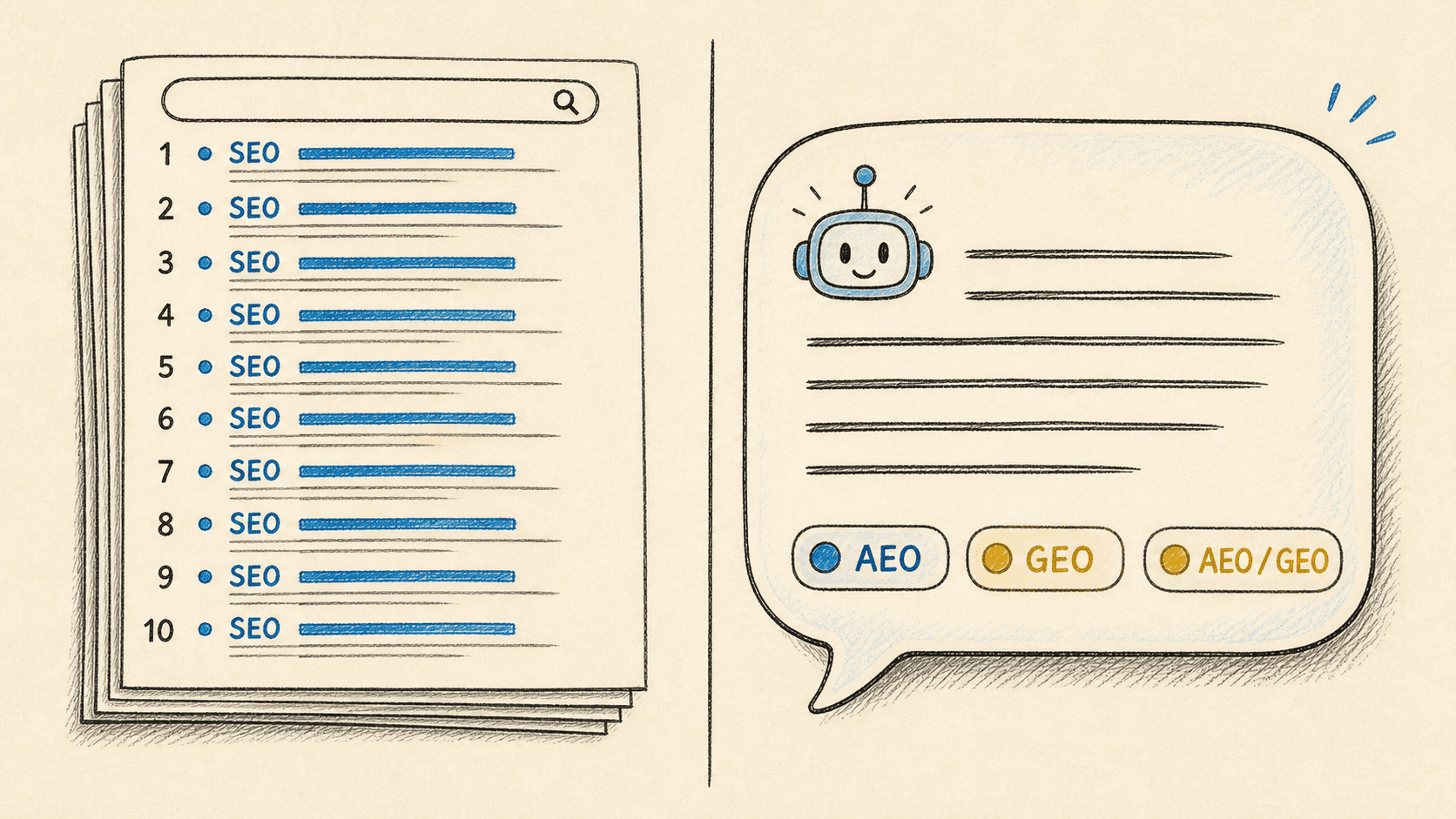
SEO ranks links in classic search. AEO (Answer Engine Optimization) and GEO (Generative Engine Optimization) optimise to be cited inside the AI-generated answer in ChatGPT, Perplexity, Google AI Overviews, Gemini and Copilot. AEO and GEO are near-synonyms for the same goal; SEO is a separate, still-necessary discipline that feeds the retrieval pool. The practical answer in 2026 is that you do all three, but you measure AEO/GEO on citation share, not blue-link position, and the winning levers (off-site footprint, entity authority, content shape, freshness) sit mostly off your own site.

AI Search Tool vs Agency vs Agent: Which Do You Actually Need in 2026?
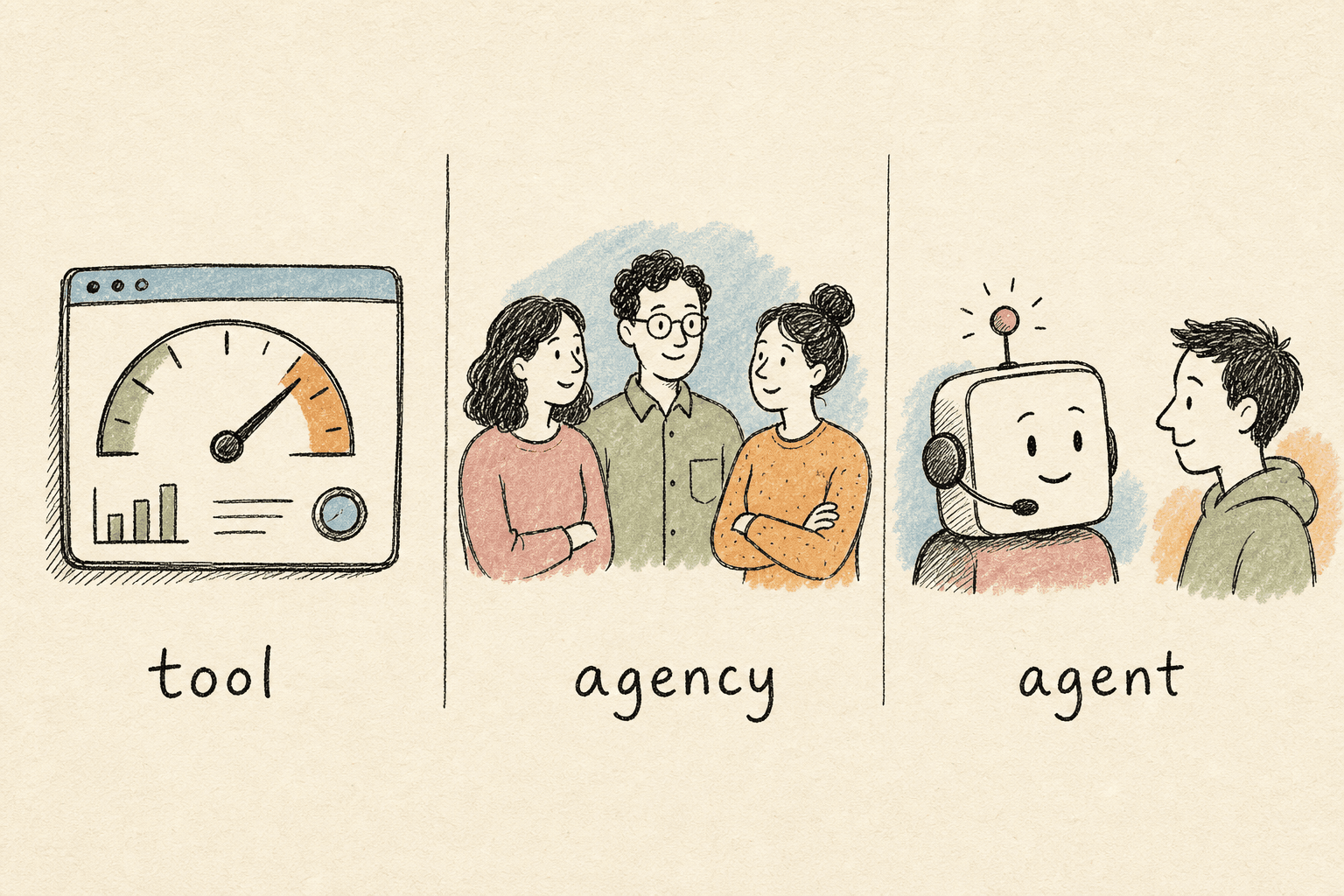
There are three ways to improve your AI search visibility, and they're layers of the same stack, not rivals: a tool (Peec, Profound) measures where you stand; an agency executes the optimisation work with people; an agent — an AI-search agent — does the recurring volume under human review. A tool changes your understanding, not the answer. An agency changes the answer but costs the most and moves at human speed. An agent does the volume at mid-market cost with humans owning quality and strategy. In 2026 most teams keep a tool and add one execution layer — the real decision is which one.
How to Build AI Agents on the Peec AI MCP for AEO and GEO (2026)
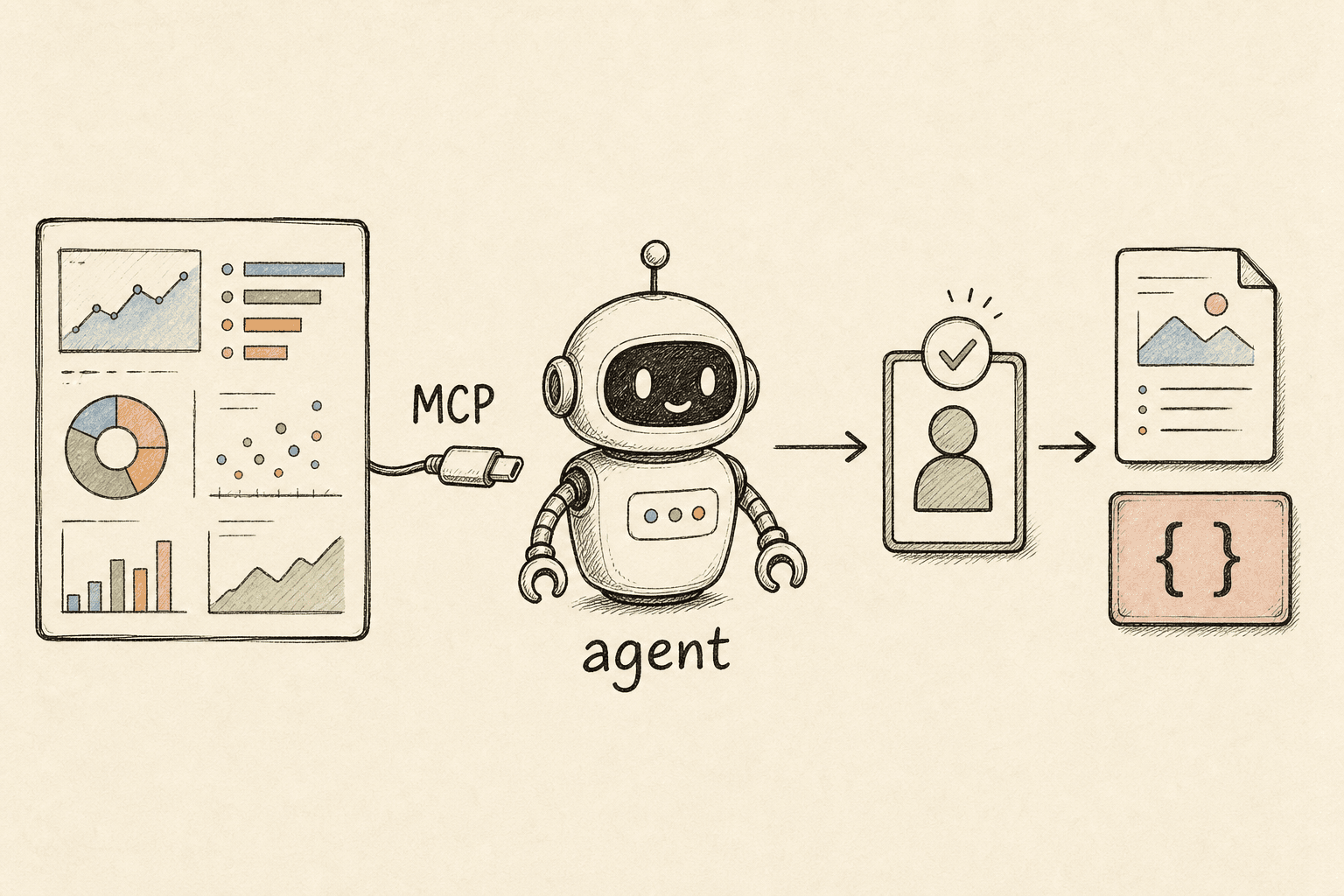
In late 2025 Peec AI shipped an official MCP server, which makes its entire AI-search measurement layer — projects, prompts, per-engine brand visibility, full AI answer transcripts, the source/citation graph and scored Actions — directly callable by an LLM agent. That means you can wire a Claude or GPT agent straight to the ground truth of how ChatGPT, Perplexity, Gemini and AI Overviews answer your category, and have it reason over the data and draft the work to close the gaps. The defensible build pattern is a read-only, five-stage loop with a human ship gate: the agent triages and drafts; a person verifies and ships.