How to Get Electrician Leads from Facebook Groups in 2026 (Without Getting Banned)

TL;DR
- Local Facebook groups are still one of the best free sources of electrical work in the UK — homeowners ask "can anyone recommend a good electrician?" every single day.
- The catch: posts get buried within hours, the channel only rewards constant daily presence, and almost every shortcut people use to scale it — second accounts, virtual assistants logging in from abroad, copy-paste comments — is exactly what Meta's systems are built to flag and ban.
- The durable play is genuine, fast, human engagement. That's why a well-built AI agent that watches the groups and routes qualified leads to your WhatsApp beats both the daily grind and a flagged VA.
Do electricians still get work from Facebook groups in 2026?
Yes — and more than most trades realise. The UK electrical industry is worth £35.3bn in 2026 (IBISWorld), and in February 2026 the ECA reported demand is rising while the number of qualified sparks falls. There is more work than there are people to do it. The problem isn't demand; it's being the one who gets to it first.
Local community and "recommend a trade" Facebook groups are the most consistent free channel for that work. They run on word of mouth at scale: a homeowner posts "our sockets keep tripping, anyone know a reliable electrician near Warwick?" and a dozen neighbours tag the trade they trust. If you're the name that shows up — fast, helpful, human — you win the job before it ever reaches a paid directory.
The reason most electricians underuse the channel isn't that it doesn't work. It's that doing it properly is a grind, and doing it quickly the wrong way gets you banned.
Why do my Facebook posts and comments get buried?
Three things work against you:
- Speed. A "need an electrician" post in an active local group can collect 20–30 comments within a few hours. If you reply at 9pm, you're comment number 24 and the homeowner has already messaged the first three.
- The feed, not the group. You only see what Facebook decides to show you. If you're not in the group at the right moment, the post never surfaces — and you can't be in 20–30 groups at once, all day.
- Reach throttling. Facebook deprioritises content it reads as promotional. Drop a link or an obvious advert and fewer people see it, including the person who asked.
The electricians who win on Facebook aren't the ones with the best offer. They're the ones who respond first, in a way that sounds like a neighbour, not a sales pitch.
Why do business and VA accounts keep getting flagged or banned?
This is where most people come unstuck — and it's worth understanding precisely, because the rules are not arbitrary.
Meta's own Business Help Centre states that security flags "often start after a change in login conditions such as a new device, new location." So the moment you hand your account to a virtual assistant who logs in from another country — or run several accounts from one phone — you've triggered the exact signal Meta's fraud detection watches for. This is the single most common reason a "VA on Facebook" setup collapses within weeks: the accounts get restricted, and the work stops dead.
It gets stricter from there. Meta's Spam Community Standard and its account-integrity systems flag:
- Sending lots of friend requests or joining many groups quickly — classic bot behaviour, and a fast route to a 48-hour-to-30-day restriction.
- Repeatedly posting the same comment across groups — "Hi, we'd be happy to help, we've also messaged you" pasted 40 times a day reads as spam.
- Link-only, low-engagement accounts — profiles that never like, comment, or post anything genuine get flagged as inauthentic. A brand-new account that only drops its phone number in trade groups is a sitting duck.
Here's the uncomfortable truth the proxy-and-bot crowd won't tell you: there is no safe way to mass-spam Facebook groups. The behaviour that survives is the behaviour that looks human — because a real local tradesperson, posting in their own voice, engaging genuinely, from their own consistent device, is the thing Meta is trying to protect. That's not a limitation. It's the opportunity. The trades who treat Facebook like a community win; the ones who treat it like a billboard get banned.
Facebook groups vs paid lead platforms: which is actually better?
Most electricians eventually try the paid platforms. Here's the honest comparison.
| Local Facebook groups | Paid lead platforms (Checkatrade, Bark, MyBuilder, Rated People) | |
|---|---|---|
| Cost | Free | Checkatrade ~£60–£150/month; Bark pay-per-lead with no membership |
| Lead exclusivity | The lead is yours if you respond first and well | Each enquiry is shared with 3–6 competing trades at once |
| What it feels like | A neighbour recommending you | A price war from the first second |
| Lead quality | Warm — they asked, neighbours vouched | Frequently poor; neutral Trustpilot reviews report up to ~70% of paid leads never even answer |
| Effort | High and constant (manual monitoring) | Low effort, but you pay for it in fees and margin |
| Control | You own the relationship and your reputation | The platform owns the customer |
The paid platforms have their place for filling quiet weeks. But the structural problem never goes away: you're buying the same lead as three to six competitors, so you win by being cheapest, not best. That's why so many established electricians quietly drift back to word of mouth and Facebook — the leads are warmer, exclusive, and free. The only cost is your time. Which brings us to the real question.
How much time does doing this properly actually take?
If you do it well — monitoring your local groups, spotting the genuine jobs, replying fast in your own voice, and following up by message — it takes 30–60 minutes a day, every day, split across the morning and evening, when you'd rather be on the tools or with your family. Miss a day and you miss the jobs.
That's the trade-off nobody mentions: the free channel costs you the one thing you can't make more of. And the obvious fixes both fail. A virtual assistant gets your accounts flagged and can't qualify a job they don't understand ("is this a quick fix or a rewire?"). A crude bot gets you banned and makes you look like a spammer in front of the exact neighbours whose trust you're trying to earn.
The better way: an AI agent that watches the groups so you don't have to
There's a third option, and it's the one we build at AI Heroes.
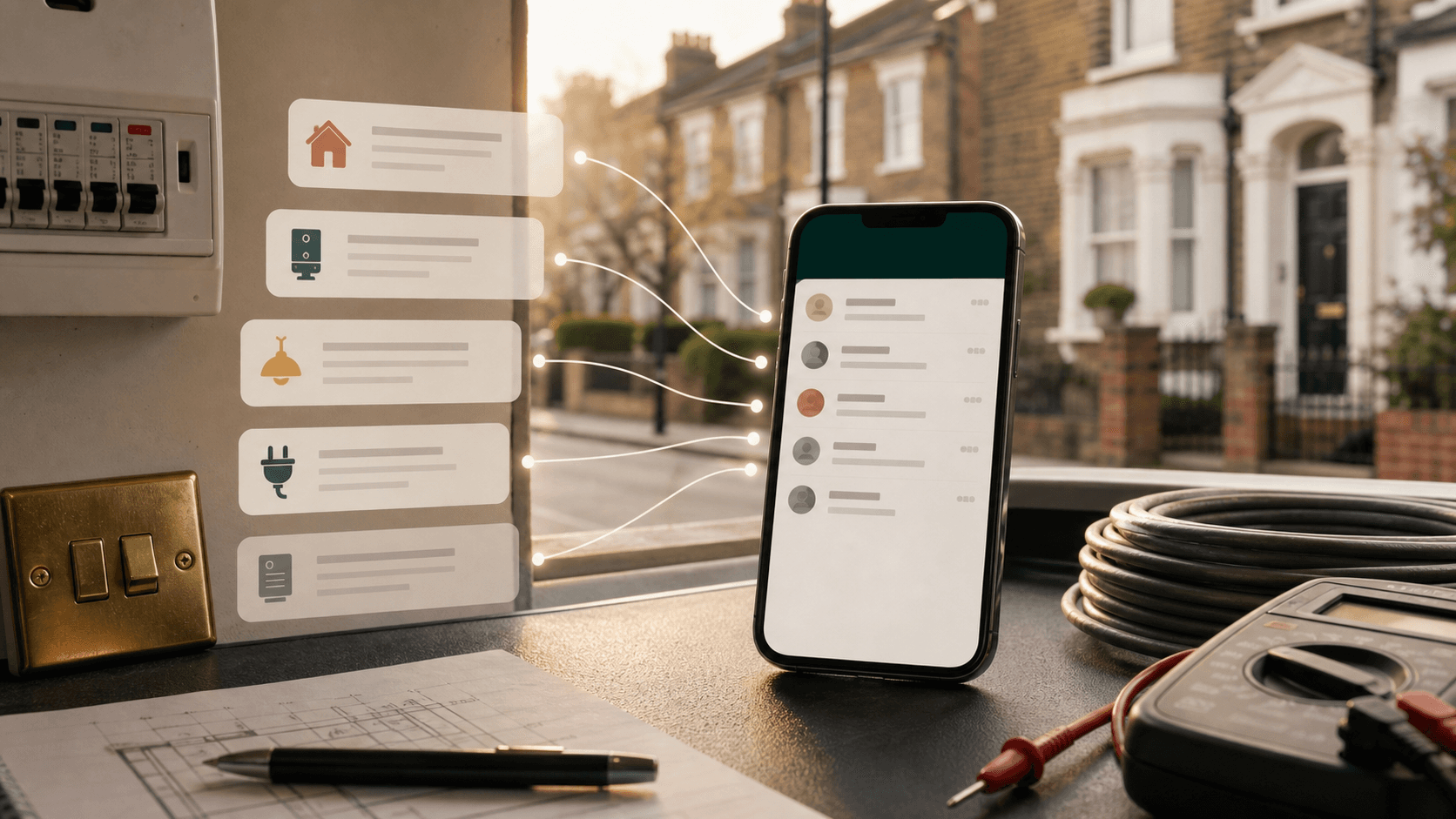
Instead of you refreshing Facebook all day, or an offshore VA tripping Meta's alarms, an AI agent does the watching — quietly and continuously — across the local groups that matter to you. When someone genuinely needs an electrician, it spots the post in real time, drafts a reply in your own voice (helpful, local, human — never copy-paste sales spam), and sends the lead straight to your WhatsApp so you can approve it, jump in, or get it booked before your competitors have even seen it.
Crucially, it's built to respect how Facebook actually works:
- Genuine engagement, not mass spam. The agent behaves like a real local presence — varied activity, natural language, consistent and proper account hygiene — because that's the only approach that survives, and the only one that protects your reputation.
- A human stays in the loop. You're not handing your business to a robot. The agent surfaces and drafts; you stay in control of what goes out, in your tone.
- It qualifies before you pick up the phone. Emergency call-out or a £10k rewire? In your area or out of range? Worth your minimum call-out or not? The agent sorts that first, so you only spend time on the jobs worth your time.
- It gets better with you. Like training a good apprentice: a quick bit of feedback — "that one wasn't for us," "say it more like this" — and it sharpens to your patch, your tone, your kind of work.
The result is the warm, exclusive, free Facebook lead flow you'd get from doing it perfectly every day — without the daily grind, and without the ban risk.
Want this running on your patch? Tell us about your business and we'll show you exactly what it would look like for your area.
What about getting found by ChatGPT?
Worth knowing where this is heading. In 2026, the way homeowners find trades is shifting fast: BrightLocal's 2026 survey found AI-tool use for local-business recommendations jumped from 6% to 45% in a single year — now the third most-used source behind Google and Facebook. Increasingly, a homeowner doesn't search "electrician Warwick"; they ask ChatGPT "who's a good, well-reviewed electrician near me?"
Winning Facebook groups captures the demand that exists today. Being the name AI recommends captures the demand that's coming. Both are winnable — and they're the two things we help electricians own.
That second one is its own service. AI Heroes runs an AI-search service for electricians: we make your business the name ChatGPT, Gemini and Google's AI recommend when someone in your area asks for an electrician — so you get found by the homeowners who now skip the search bar entirely.
Sources: IBISWorld UK Electricians industry (2026); ECA, "Electrical skills gap deepens as apprenticeship starts fall despite surging demand" (February 2026); Meta Business Help Centre and Spam Community Standard; BrightLocal Local Consumer Review Survey 2026; Trustpilot and Reviews.io trade-platform reviews (2025–2026).
Frequently Asked Questions

Founder, AI Heroes
I build AI companies and the systems inside them. At AI Heroes, we give businesses the functional capacity to grow without the headcount growth normally demands — sales that follows up, marketing that runs, content that ships, ops that handles itself. We audit where you're leaving growth on the table, build the team that captures it, and hand it over completely.
I've built at scale before. Leading product and GTM at SlideSpeak AI (1M+ monthly users, profitable, bootstrapped). CPO at Disperse — the AI construction platform that went from 3 to 200+ people on $35M raised. I also co-founded LOBOMAR, a luxury fashion label featured in Elle, Cosmopolitan, and the LA Times, with shows at the London Design Museum, Wereldmuseum, and Amsterdam Fashion Week.
Related Articles
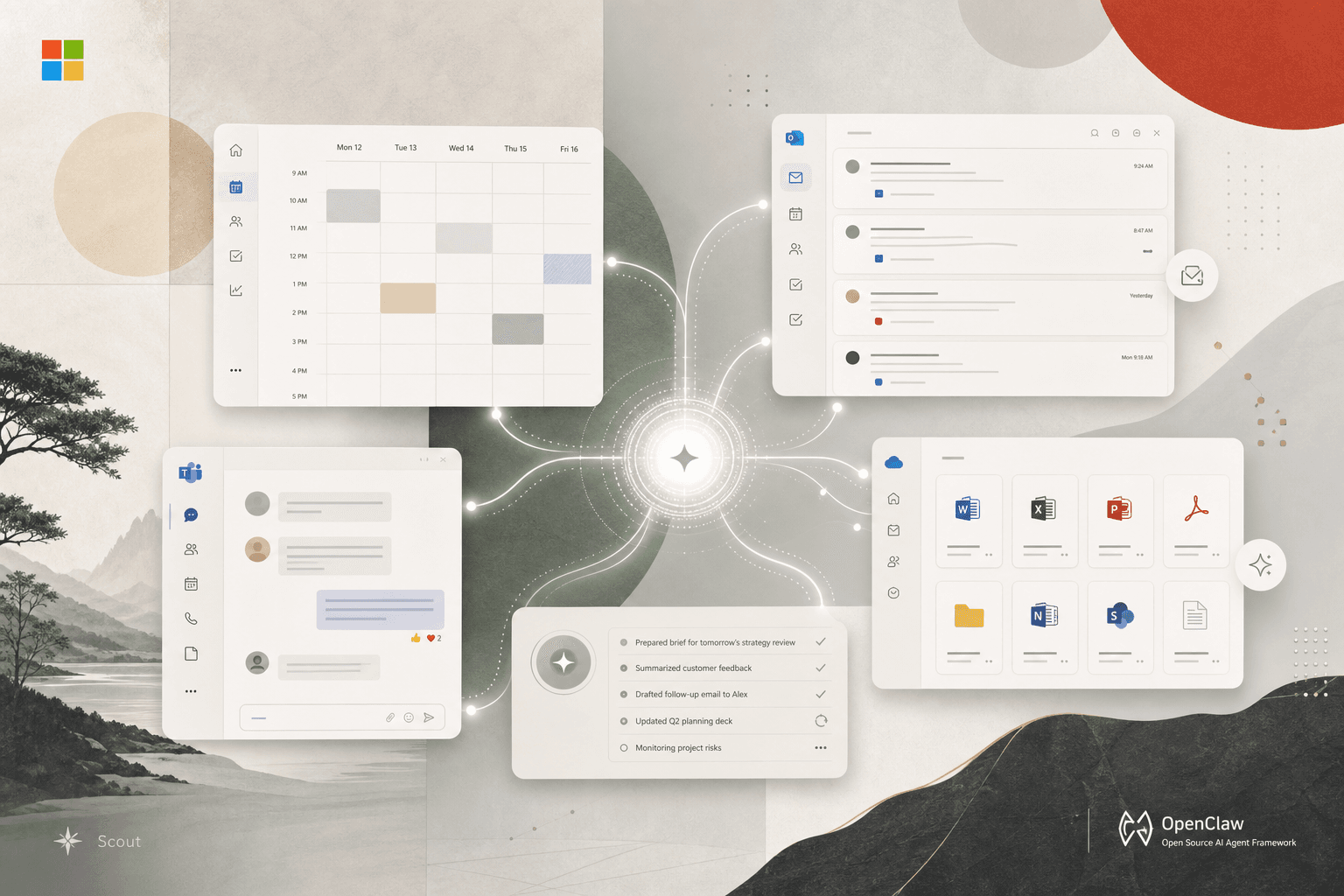
Microsoft Scout, Explained: The Always-On 'Autopilot' Built on OpenClaw
Microsoft Scout is the first of a new category Microsoft calls 'Autopilots' — a Windows and macOS desktop agent that acts on your files, shell, browser and Microsoft 365, and works autonomously in the background. Here's what's actually confirmed, what isn't, how to get it, and why it's built on the open-source OpenClaw framework.

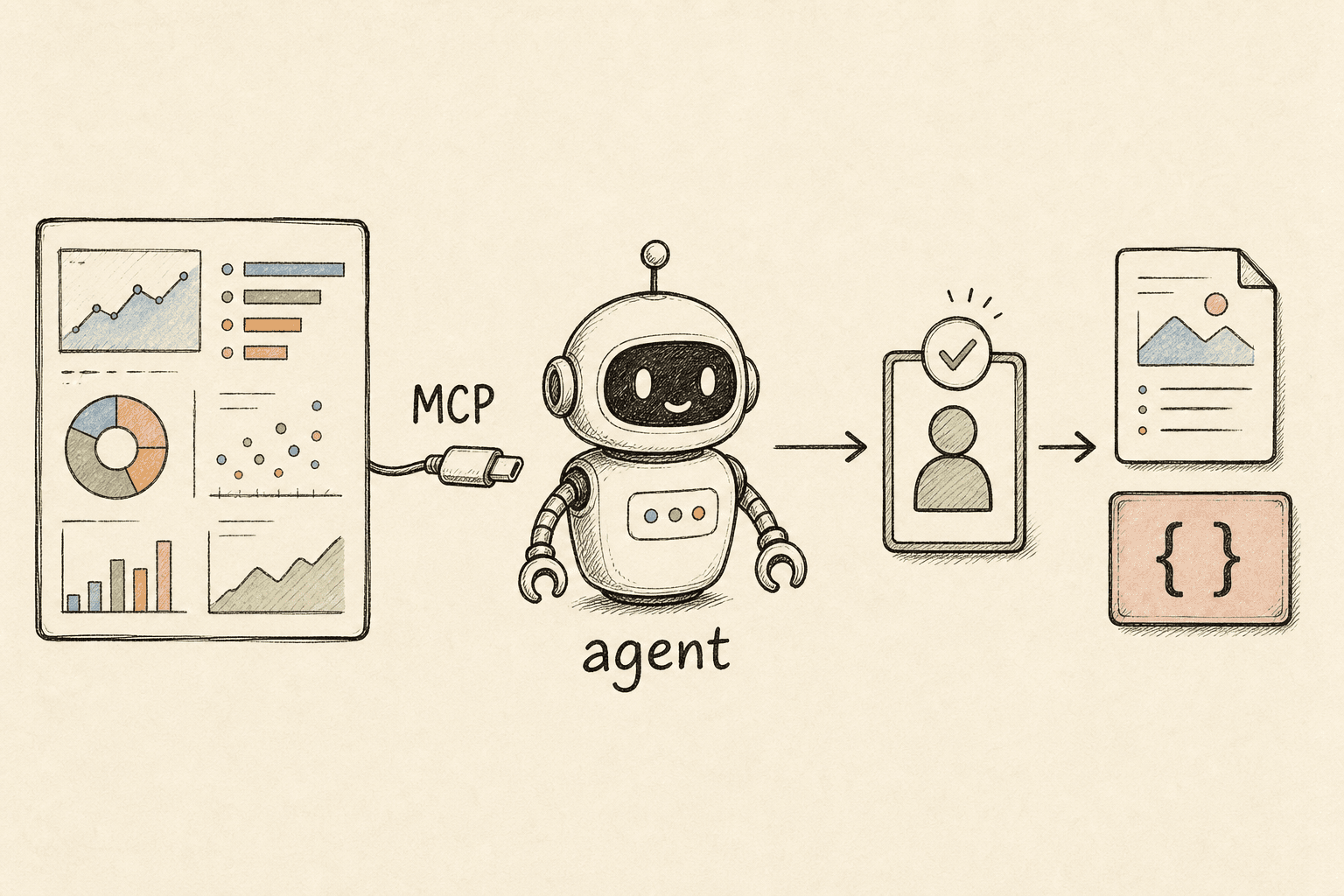
How to Build AI Agents on the Peec AI MCP for AEO and GEO (2026)
In late 2025 Peec AI shipped an official MCP server, which makes its entire AI-search measurement layer — projects, prompts, per-engine brand visibility, full AI answer transcripts, the source/citation graph and scored Actions — directly callable by an LLM agent. That means you can wire a Claude or GPT agent straight to the ground truth of how ChatGPT, Perplexity, Gemini and AI Overviews answer your category, and have it reason over the data and draft the work to close the gaps. The defensible build pattern is a read-only, five-stage loop with a human ship gate: the agent triages and drafts; a person verifies and ships.
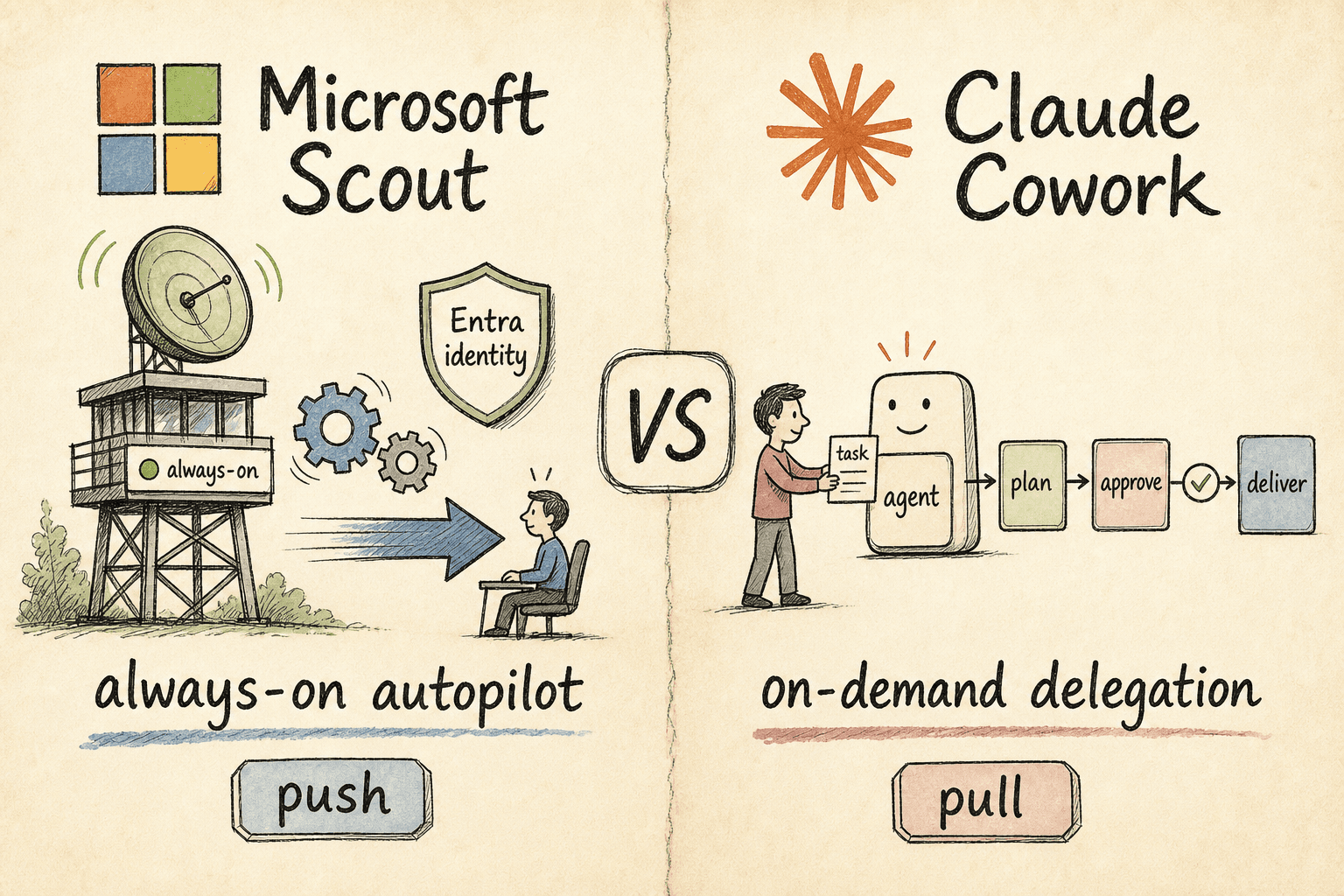
Microsoft Scout vs Claude Cowork: Autopilot or Delegation?
Two of 2026's biggest agent launches make opposite bets. Microsoft Scout is a desktop autopilot that runs in the background and acts on your behalf; Claude Cowork waits for you to hand it a task, then delivers. One is push, the other pull — here's which fits your team.