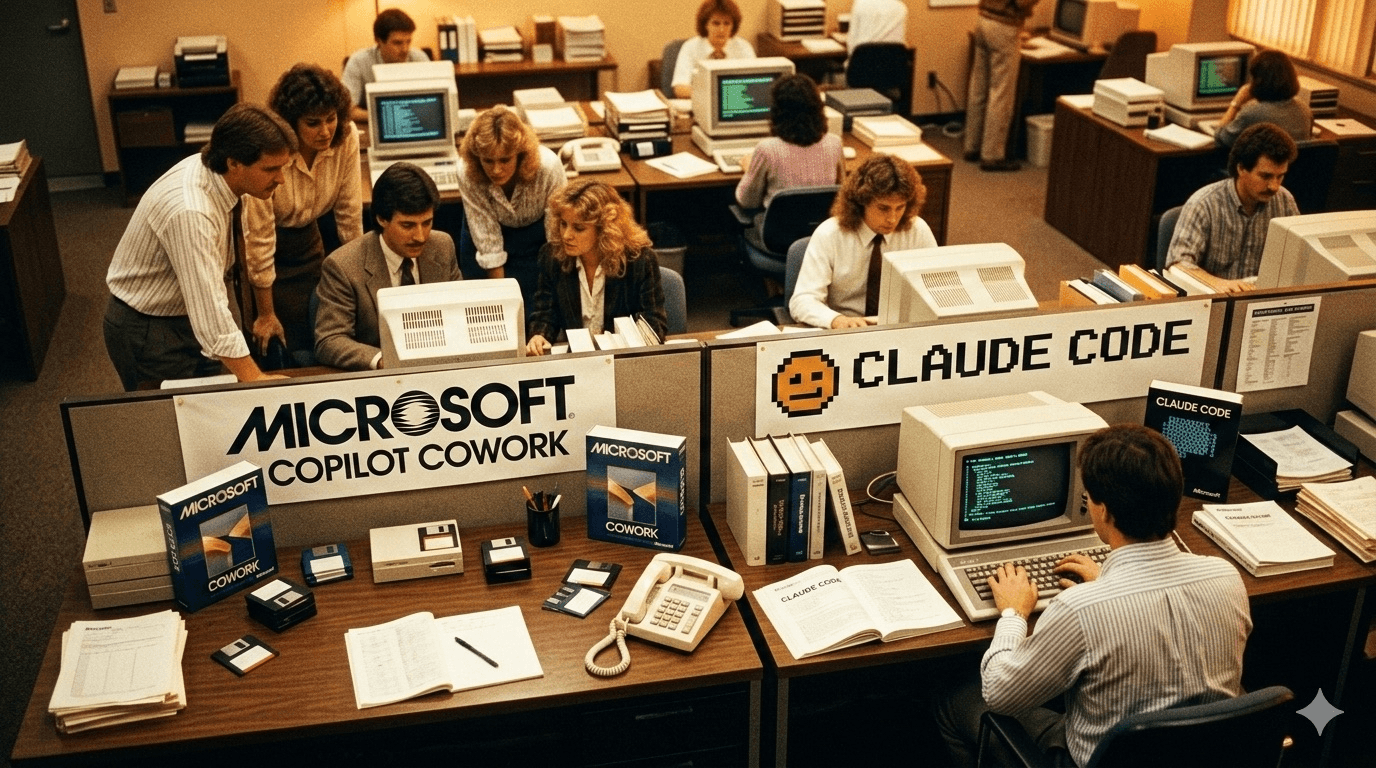

Published March 9, 2026 — the day Microsoft announced Copilot Cowork.
The Announcement That Arrived at the Wrong Moment
Marcus is a CTO at a forty-person SaaS company in Austin. On the morning of March 9, 2026, he is doing what a lot of technical leaders are doing: reading the Microsoft announcement about Microsoft Copilot Cowork on one browser tab and watching his engineers ship pull requests powered by Claude Code on the other. He has been using Claude Code since January. His team is faster than they've been in two years. The velocity numbers are almost embarrassing compared to the previous quarter.
And now Microsoft is announcing an autonomous AI agent — built with Anthropic's technology, carrying the word "Cowork" in its name — that does "long-running, multi-step work" across Outlook, Teams, Excel, and PowerPoint. His VP of Operations has already forwarded the press release with a single question: should the whole company be using this?
Marcus is not asking which tool is better. He is asking something harder. He is asking whether he has been automating the wrong floor of his company all along.
The Taxonomy Nobody Fixed
Here is the problem with the current moment in AI tooling. Every product that executes more than two steps in sequence has claimed the word "agent." Claude Code calls itself an agent. Microsoft calls Copilot Cowork an agent. Seventeen startups that launched last quarter called their products agents. The word has absorbed so much meaning that it now conveys almost none, and this is precisely why the Microsoft Copilot Cowork vs Claude Code comparison has become so easy to frame incorrectly.
They both run multi-step tasks without constant supervision. They both carry Anthropic's model technology in their architecture. They both promise to return hours to your week. On the surface, they are competing for the same job title. This is the frame that almost every comparison article has accepted without examining, and it is wrong.
What these tools automate are two structurally different layers of how a company operates. One runs on the organizational information layer — the floor where emails are sent, meetings are prepped, financial summaries are assembled, presentations are built. The other runs on the production layer — the floor where business logic is expressed as code, systems are deployed, and the architecture that makes software function is built and maintained.
Forbes identified the origin of this split with precision: Anthropic's Cowork "emerged when Anthropic noticed non-technical users adopting Claude Code for file management tasks." The bifurcation wasn't a strategic roadmap decision. It was a response to the fact that two completely different types of people were trying to use the same tool, on two completely different floors of their organizations.
The comparison isn't wrong because the tools are similar. It's wrong because they're neighbors, not competitors.
The Morning That Assembles Itself
Jennifer is Head of Strategic Partnerships at a healthcare company in Chicago. Her Tuesday looks like this: forty-seven unread emails, three reports that need summarizing before the 10am, a board presentation due Thursday that requires numbers from Excel, context from last week's Teams meeting, and a draft that her VP hasn't seen yet. None of this requires her judgment. All of it consumes it.
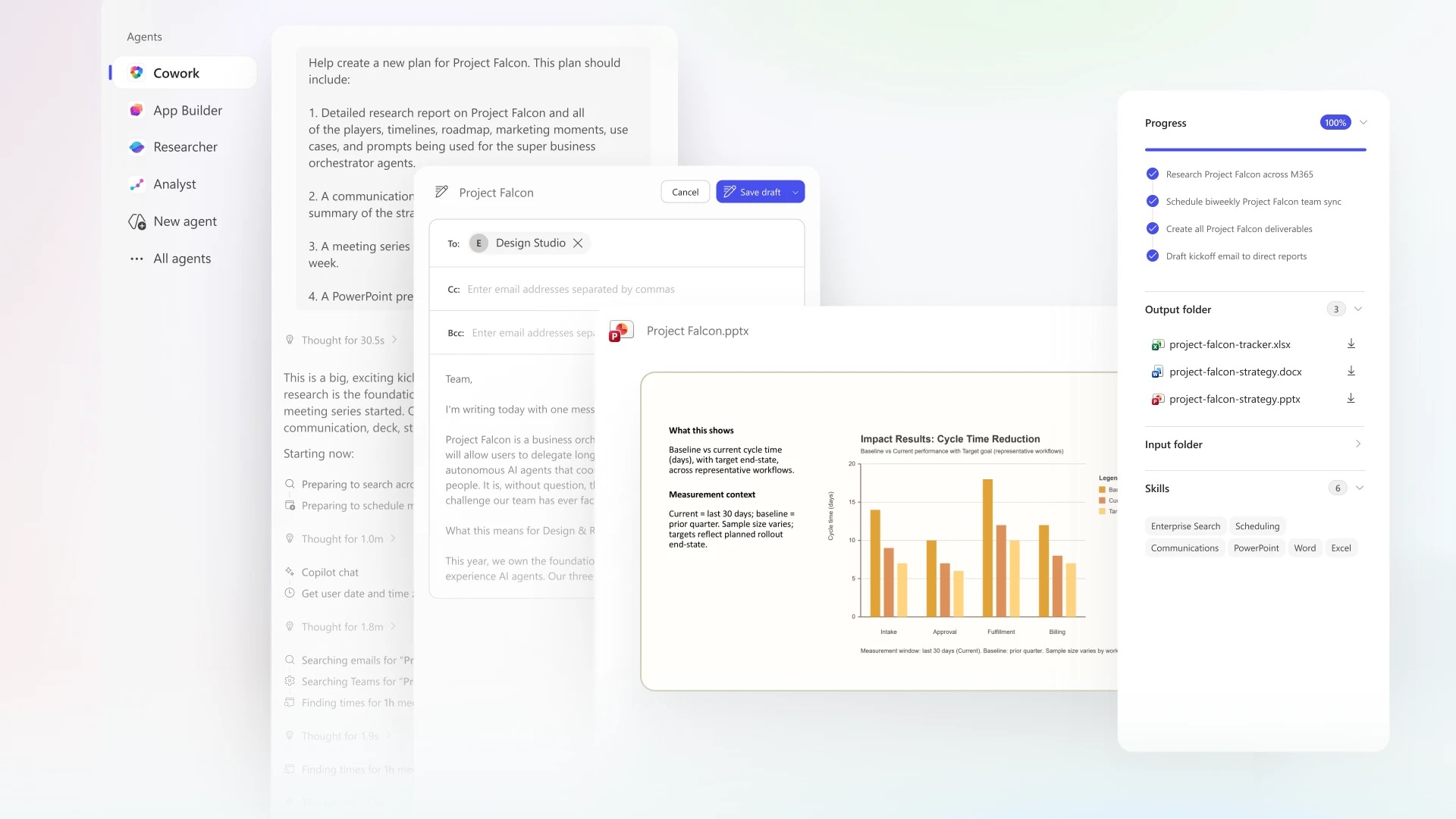
Microsoft Copilot Cowork, announced today and entering research preview through the Frontier program later this month, is built for the layer where Jennifer's day actually breaks down. Its technical foundation is Anthropic's Claude Cowork "agentic harness" — but Microsoft's implementation runs in the cloud inside a customer's M365 tenant, covered by enterprise data protection, grounded in what Microsoft calls "Work IQ," an intelligence layer drawn from a user's emails, files, meetings, and calendar.
Jennifer types one sentence: "Prep for the board presentation Thursday covering Q3 performance and the Meridian partnership." Copilot Cowork pulls the financial data from Excel, surfaces the relevant Teams conversation, drafts a structured brief in Word, builds a slide deck in PowerPoint, schedules a prep session in Outlook, and pauses before sending anything. Jennifer approves the high-stakes steps. The rest runs.
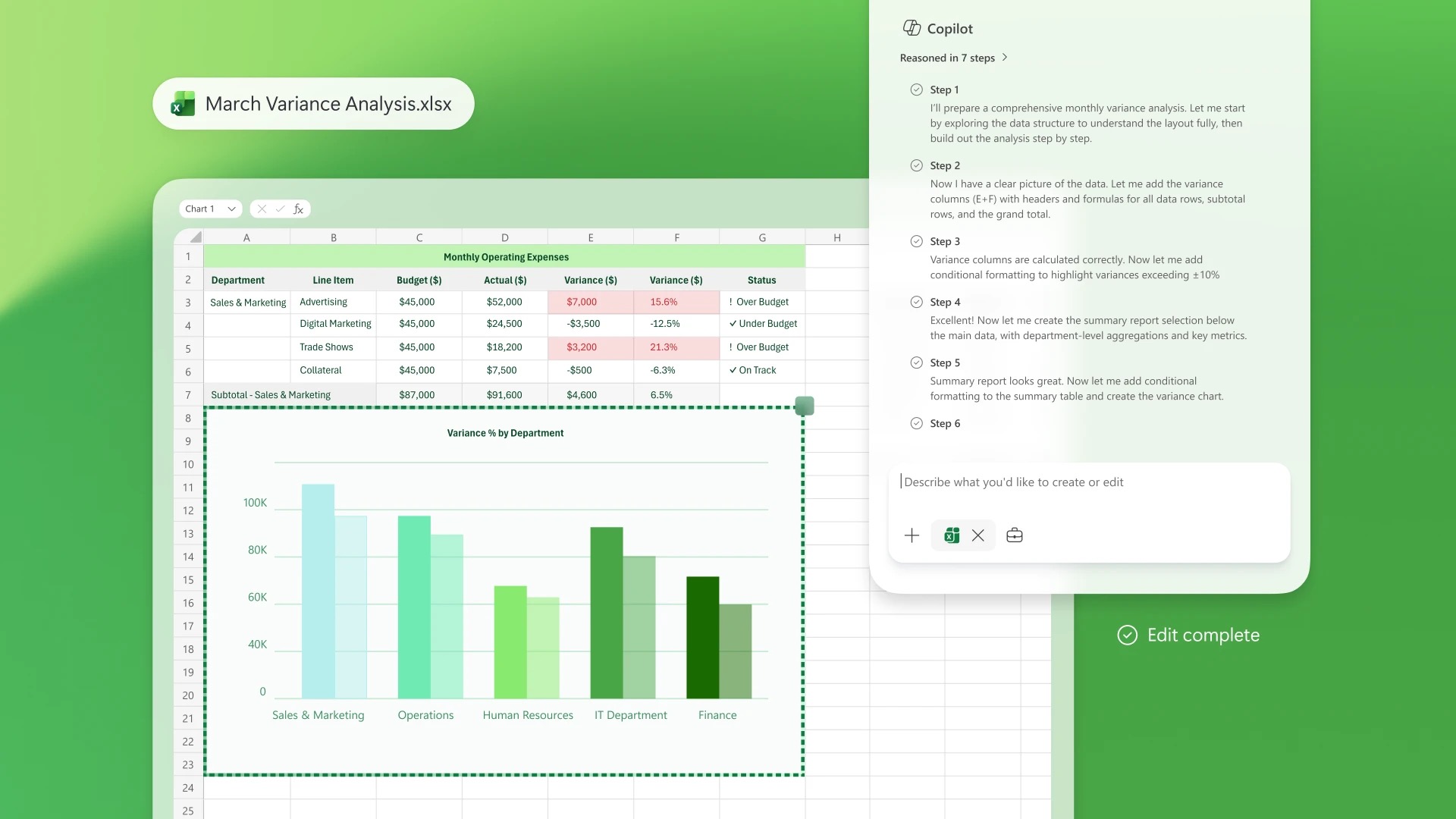
What Copilot Cowork is fundamentally built for is the connective tissue between Microsoft 365 applications — the cognitive overhead of organizational information management that nobody owns but everyone maintains. Its price reflects this: included in the existing $30/user/month M365 Copilot subscription, with tiered usage available on top.
The Codebase That Already Knows
Carlos is a senior engineer at a fintech startup in Austin. He has inherited 80,000 lines of TypeScript from an original team that no longer exists. The documentation is partial. The test coverage is 23%. A key client needs a custom export API by Friday, and Carlos has three other escalations burning alongside it.
Claude Code — which shipped version 2.1 in January with over forty new features, added MCP Tool Search that month (boosting multi-tool accuracy from 49% to 74% on complex agentic tasks), launched native voice mode on March 3, and released Claude Code Security in February — does something categorically different from what Copilot Cowork does. It reads the entire codebase. Not a snippet, not a summary. The full system, up to one million tokens of context, which means it understands function relationships across modules, traces the architecture before changing it, and reasons about what a change will break three layers down before it writes a single line.

Carlos types one sentence describing the export endpoint. Claude Code maps the data model, writes the implementation following the existing codebase patterns, adds tests, and flags a dependency deprecation that would have caused a production incident. Carlos reviews it, catches one field mapping error, approves the rest. A task that should have consumed Thursday is closed by Wednesday afternoon.
Claude Code was built for the floor where your company's production logic lives — not as an assistant that suggests code, but as a collaborator that understands the system it's working inside.
Quick Comparison: Copilot Cowork vs Claude Code
| Microsoft Copilot Cowork | Claude Code | |
|---|---|---|
| Best for | Knowledge workers, operations teams | Engineers, developers, technical founders |
| Organizational layer | Information layer (email, docs, slides) | Production layer (codebases, systems) |
| Integration | Deep M365 (Outlook, Teams, Excel, SharePoint) | Terminal, IDE, GitHub, CI/CD |
| Context | Emails, meetings, files, calendar | Full codebase (up to 1M tokens) |
| Pricing | Included in M365 Copilot ($30/user/month) | $100/month (Max plan) or API |
| Requires | Microsoft 365 subscription | Any development environment |
| Security | M365 enterprise governance, SOC 2 | Claude.ai enterprise or self-managed |
Three Scenarios Where It Wasn't Even Close
The Presentation at 11pm
Soo-Jin is VP of Finance at a mid-market retail company. On a Wednesday evening, a surprise executive request lands: revised budget variance analysis, ready by 9am Thursday. Her team has gone home.
She opens Copilot Cowork and describes the task — pull last two quarters of variance from her Excel models, compare against the three Word documents from prior board meetings, generate an executive brief with charts for the PowerPoint template her team uses. Forty minutes later, she has a formatted document that is eighty percent complete. Two numbers need manual correction from a source file outside her M365 permissions. The rest is ready for review.
The version she would have produced alone by midnight would have been the same eighty percent — except she'd have been the one doing the formatting.
Claude Code has nothing to do with this outcome. The task lived entirely on the organizational information layer. Copilot Cowork was the only tool that could run it.
The Module Nobody Wanted to Touch
James is a founding engineer at a climate tech startup in Seattle. He is the last original developer on the team. The backend is Django, 2023-era. A major client needs a custom export API by Friday.
He opens Claude Code in his terminal. One instruction: understand the exports module data model and build a new API endpoint following the existing pattern, using the client's CSV schema, which he pastes inline. Claude Code reads the codebase, identifies the relevant modules, traces the patterns, writes the endpoint, adds tests, and flags a downstream deprecation the new endpoint would have surfaced in production. James reviews it, catches one field mapping error, approves the rest, and deploys Thursday afternoon.
Microsoft Copilot Cowork could not have done this. It has no codebase access, no terminal, no concept of what a Django migration looks like. This task lived entirely on the engineering layer — and Claude Code was the only tool positioned to run it.
The Founder Who Stopped Picking Sides
Back to Marcus in Austin. His engineers are in Claude Code. His VP of Operations, once onboarded to Copilot Cowork, begins using it to prep for weekly cross-functional reviews — assembling Teams summaries, drafting the agenda in Word, pulling the financial snapshot from Excel, all from a single instruction. The two tools run in the same company without ever touching each other, because they were never competing for the same task.
They were automating different floors that had, until now, both been run entirely by humans.
What the Shared Name Hides
The first mistake people make is reading "Cowork" in Microsoft's product name and concluding that Copilot Cowork is Claude Code adapted for business. It is not. Copilot Cowork is built on Claude Cowork — Anthropic's separate desktop agent for non-developers, launched January 12, 2026, which runs locally on a user's machine. Claude Code is a different product with a different architecture, a different pricing model, and a different intended user entirely.
The second mistake is treating Claude Code as a code autocomplete tool that happens to have a large context window. Claude Code's million-token context, its security scanning capabilities, and its voice-driven task execution mean it can reason about architecture decisions, dependency risk, and infrastructure patterns across an entire production system. Developers who treat it as a smarter IntelliSense are leaving the most consequential capabilities unused.
Both mistakes come from the same source: comparing the tools on the "agentic" axis rather than the organizational-layer axis. Fix the axis, and both mistakes disappear.
The Single Question That Cuts Through It
Before committing to either tool — or a rollout plan, or a licensing model — ask one question: where does the most expensive friction in your organization actually live?
- If engineers are slow because the codebase is too complex to navigate without full-system context, Claude Code is the answer.
- If knowledge workers are losing hours a day moving information between apps that were never designed to talk to each other, Copilot Cowork is the answer.
- If the honest answer is both — which it often is in companies past thirty people — the question is sequencing: which floor is burning faster?
The universal truth hiding inside this comparison is uncomfortable for the vendors but useful for everyone else: these tools are not competing for the same dollar. They are competing for the same word. "Agentic" is not a category — it is a capability that different tools are applying to different organizational layers.
What Marcus Did With the Other Tab
Three days after the announcement, Marcus's VP of Operations has a rollout plan for Copilot Cowork in his inbox. Marcus reads it, makes two edits, and approves it. It covers the knowledge workers. The engineers, he leaves alone.
He closes the comparison tab he had been keeping open for weeks. Not because he found a winner. Because the question he'd been asking — which one — turned out to be the wrong question. There were two floors. There were two tools. The harder question was never which to choose.
It was which floor to automate first.
Want to understand the full Anthropic ecosystem? Read our breakdown of OpenClaw vs Claude Code — and how the tools that sit above and below Claude Code complete the picture.
The agent built for this

Richard
A forward-deployed AI agent that gets your software live and adopted inside every customer.
Meet RichardFrequently Asked Questions

Founder, AI Heroes
I build AI companies and the systems inside them. At AI Heroes, we give businesses the functional capacity to grow without the headcount growth normally demands — sales that follows up, marketing that runs, content that ships, ops that handles itself. We audit where you're leaving growth on the table, build the team that captures it, and hand it over completely.
I've built at scale before. Leading product and GTM at SlideSpeak AI (1M+ monthly users, profitable, bootstrapped). CPO at Disperse — the AI construction platform that went from 3 to 200+ people on $35M raised. I also co-founded LOBOMAR, a luxury fashion label featured in Elle, Cosmopolitan, and the LA Times, with shows at the London Design Museum, Wereldmuseum, and Amsterdam Fashion Week.
Related Articles

Microsoft Copilot Cowork vs Claude Cowork: The Borrowed Brain
Travis had the tab open for forty minutes before he typed a single word. On one screen: Microsoft Copilot Cowork, announced that morning. On the other: Claude Cowork, which he'd been trialing quietly for six weeks. Both run on Claude. Both claim to do the same thing. The difference is the container — and the container turns out to be the entire decision.

Microsoft Scout vs Claude Cowork: Autopilot or Delegation?
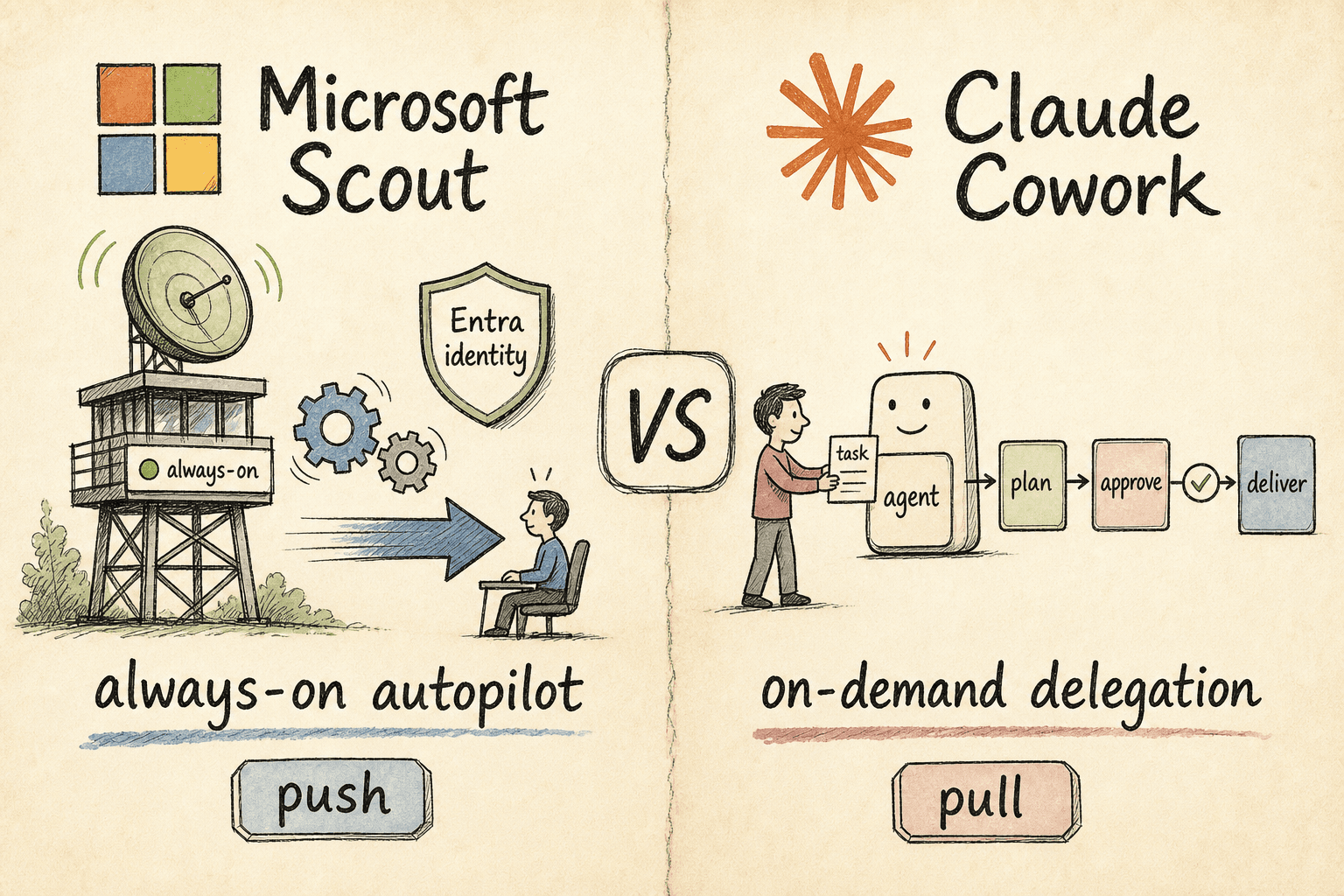
Two of 2026's biggest agent launches make opposite bets. Microsoft Scout is a desktop autopilot that runs in the background and acts on your behalf; Claude Cowork waits for you to hand it a task, then delivers. One is push, the other pull — here's which fits your team.

The House Keys Problem: What OpenClaw and Claude Code Are Really Fighting About
There's a story about the moment OpenClaw clicked for its creator. It involves house keys, a sleeping founder, and an agent that booked a restaurant without being asked. That story still tells you everything you need to know — even now that Claude Code has started asking for a small keyring of its own.