
Claude Managed Agents for Insurance Brokerages: What the New Launch Means for Renewal Workflows

Last updated: 9 April 2026
Key takeaway
Claude Managed Agents gives insurance brokerages a new way to build governed, cloud-hosted agent workflows for renewal operations. The practical win is tighter coordination across scattered renewal inputs, incomplete submissions, and messy documents, while brokers keep control of advice and sign-off.
Claude Managed Agents is a new Claude Platform capability that lets teams build and deploy cloud-hosted agents with sandboxing, long-running sessions, and scoped permissions. For Claude Managed Agents insurance brokerages work, that matters because a UK commercial renewal workflow is usually split across a brokerage management system, email threads, claims files, exposure spreadsheets, insurer questionnaires, and internal chasing notes. The launch matters if a brokerage wants to build or deploy agent workflows that gather inputs, track missing items, structure messy documents, and keep an auditable trail for human review.
So what actually launched?
Anthropic says Claude Managed Agents is a suite of composable APIs for building and deploying cloud-hosted agents at scale, now in public beta on Claude Platform. Anthropic also says the runtime handles secure sandboxing, authentication, and tool execution for you, while long-running sessions can operate autonomously for hours and keep progress and outputs even through disconnections. In the same launch, Anthropic describes multi-agent coordination as a research-preview capability and points to governance controls including scoped permissions, identity management, execution tracing, session tracing, integration analytics, and troubleshooting guidance in Claude Console.
Those are infrastructure claims, not insurance workflow claims. Anthropic did not launch a broker operating system. It launched the underlying agent runtime and governance layer a brokerage technology team could use to build one narrow workflow at a time.
Why should UK brokers care?
Because renewal work is full of fragmented operational tasks that are too fiddly to ignore and too repetitive to deserve senior attention.
Think about a mid-sized UK commercial brokerage handling property, fleet, and contractors renewals. Renewal packs arrive in different formats. Exposure data lives in multiple systems. One client sends a half-complete spreadsheet, another forwards last year's schedule, another drops an updated claims run three days late. Meanwhile account handlers are chasing certificates, checking whether submissions are complete, and trying to get a clean insurer pack out the door before the market goes cold.
This is where Managed Agents becomes commercially interesting. Not because Anthropic ships an insurance product out of the box, but because brokerages could build or deploy a workflow that keeps running across the messy middle of the process.
Where could Managed Agents help in renewal operations?
Four practical use cases stand out for UK brokerages.
Chasing renewal inputs without losing the thread
One cloud-hosted agent could gather renewal inputs from multiple approved systems and folders, while another keeps a live checklist of what is still missing. Because Anthropic says sessions can run for hours and persist through disconnections, the workflow does not need to restart every time a client sends one more attachment or a handler comes back to the file later.
Tracking incomplete submissions before they hit the market
Brokerages lose time when a submission pack looks finished until somebody notices the outstanding claims summary, payroll split, or vehicle list. Managed Agents could be used to build a governed triage step that flags incomplete submissions, logs what is missing, and routes the task back to the right handler before the file reaches an insurer-facing stage.
Turning messy documents into structured outputs
Renewal work is rarely clean. You get PDFs, screenshots, spreadsheets, prior schedules, and handwritten notes from site visits. Managed Agents could be used to build a workflow that extracts structured fields from those messy documents, assembles them into a review pack, and gives the broker a clearer starting point for placement work.
Coordinating multi-step internal workflows
The biggest hidden cost in a brokerage is often workflow fragmentation, not the reading of one document. If one agent gathers files, another prepares a structured output, and another handles internal task routing, you reduce handoff friction across admin, servicing, and broking. Anthropic's research-preview note on multi-agent coordination is relevant here because the renewal process is already multi-step by nature.
That is the most important commercial insight from the launch. The value is not a flashy single-agent demo. The value is lower orchestration drag across a renewal workflow that currently lives in too many places.
What it does not mean
Claude Managed Agents does not mean Anthropic launched a plug-and-play brokerage management system.
It does not mean compliance approval becomes optional or that a regulated team should let an agent approve wording, sign off advice, or choose markets without human review.
It does not mean Anthropic shipped an insurance-specific product. The launch is horizontal infrastructure. The vertical application is something a brokerage would still need to design, govern, test, and supervise.
What about governance and pricing?
Anthropic's official launch note matters here because it makes governance a first-class part of the offer rather than an afterthought. Anthropic explicitly calls out scoped permissions, identity management, and execution tracing, with session tracing and analytics visible in Claude Console. For any brokerage even considering production workflows, those details matter more than the novelty factor.
Anthropic also states pricing is standard Claude Platform token rates plus $0.08 per session-hour for active runtime. That pricing model fits the operational reality of renewal admin better than a simple prompt-in, prompt-out framing because the cost driver is the runtime of the workflow, not just one text generation event.
Is this the same as Claude Code?
No. Claude Code is a coding agent product. Claude Managed Agents is the cloud-hosted agent capability relevant to building deployed workflows with runtime, tool execution, and governance handled by the platform. A brokerage engineering team might use Claude Code during development, but this launch is about the production layer for agent workflows.
Where should a brokerage start?
Start with the backlog that annoys your handlers but does not require regulated judgement. Renewal preparation, incomplete submission tracking, certificate and admin backlog triage, and structured handoffs are better starting points than anything involving final coverage advice or compliance sign-off.
If you are mapping where this fits in your operating model, review our AI solutions, see how we structure pricing, browse more launch analysis on the blog, or talk to Marco.
Authoritative sources
Frequently Asked Questions

Founder, AI Heroes
I build AI companies and the systems inside them. At AI Heroes, we give businesses the functional capacity to grow without the headcount growth normally demands — sales that follows up, marketing that runs, content that ships, ops that handles itself. We audit where you're leaving growth on the table, build the team that captures it, and hand it over completely.
I've built at scale before. Leading product and GTM at SlideSpeak AI (1M+ monthly users, profitable, bootstrapped). CPO at Disperse — the AI construction platform that went from 3 to 200+ people on $35M raised. I also co-founded LOBOMAR, a luxury fashion label featured in Elle, Cosmopolitan, and the LA Times, with shows at the London Design Museum, Wereldmuseum, and Amsterdam Fashion Week.
Related Articles
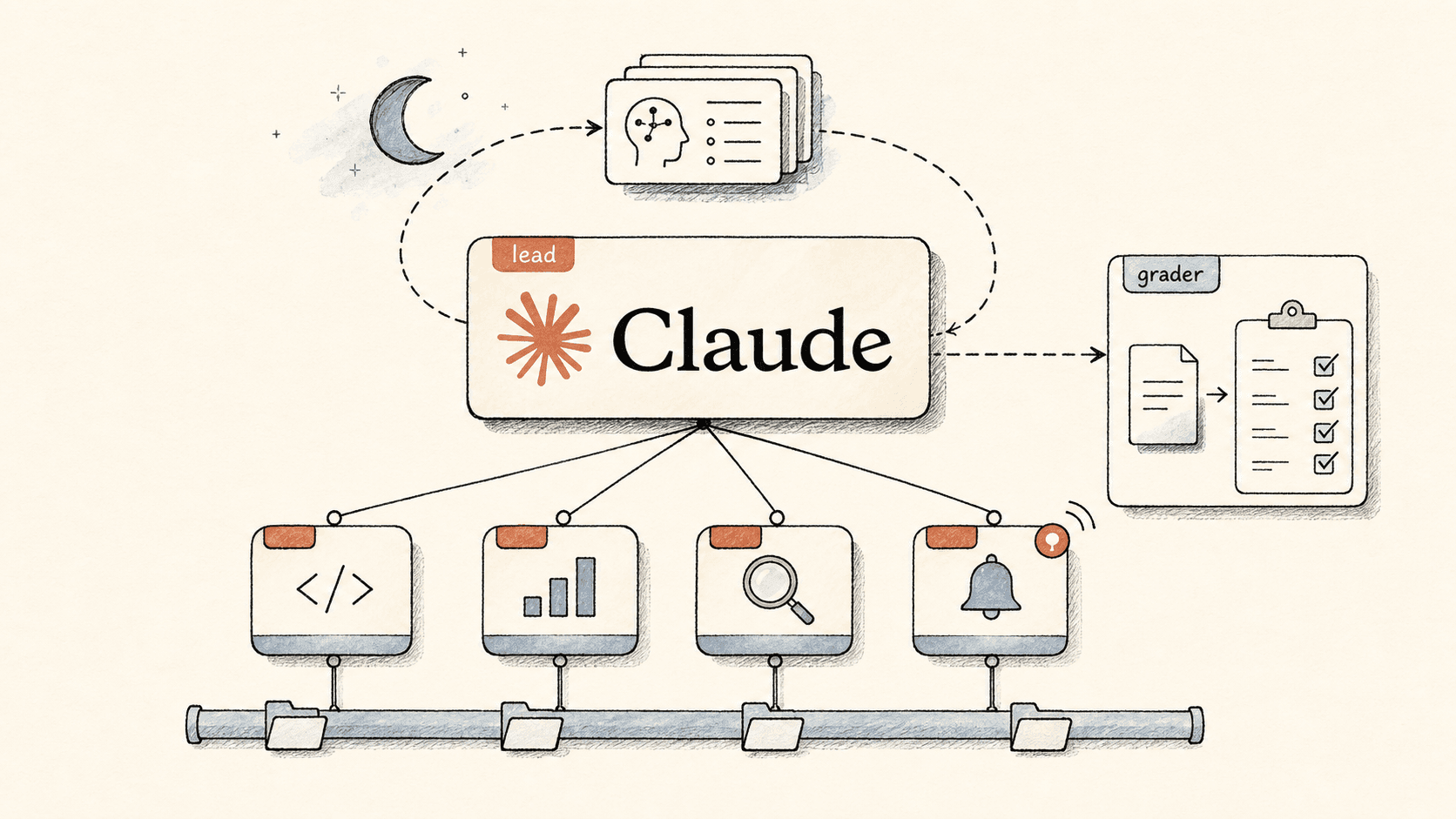
How Claude Managed Agents Actually Work: Dreaming, Outcomes, Multiagent Orchestration, and Webhooks (2026)
Anthropic gave Claude Managed Agents four new mechanics at Code w/ Claude: Dreaming, Outcomes, Multiagent Orchestration, and Webhooks. The one that changes how you build is Outcomes — a separate grader that loops the agent until a rubric is met. Here is how each one works, and when to reach for it.


Claude Managed Agents for Payroll Bureaus: What the Launch Means for UK Monthly Payroll Ops
Claude Managed Agents suggests a more production-ready way to run governed agent workflows. For UK payroll bureaus, the interest is recurring exception handling, not speculative full automation.
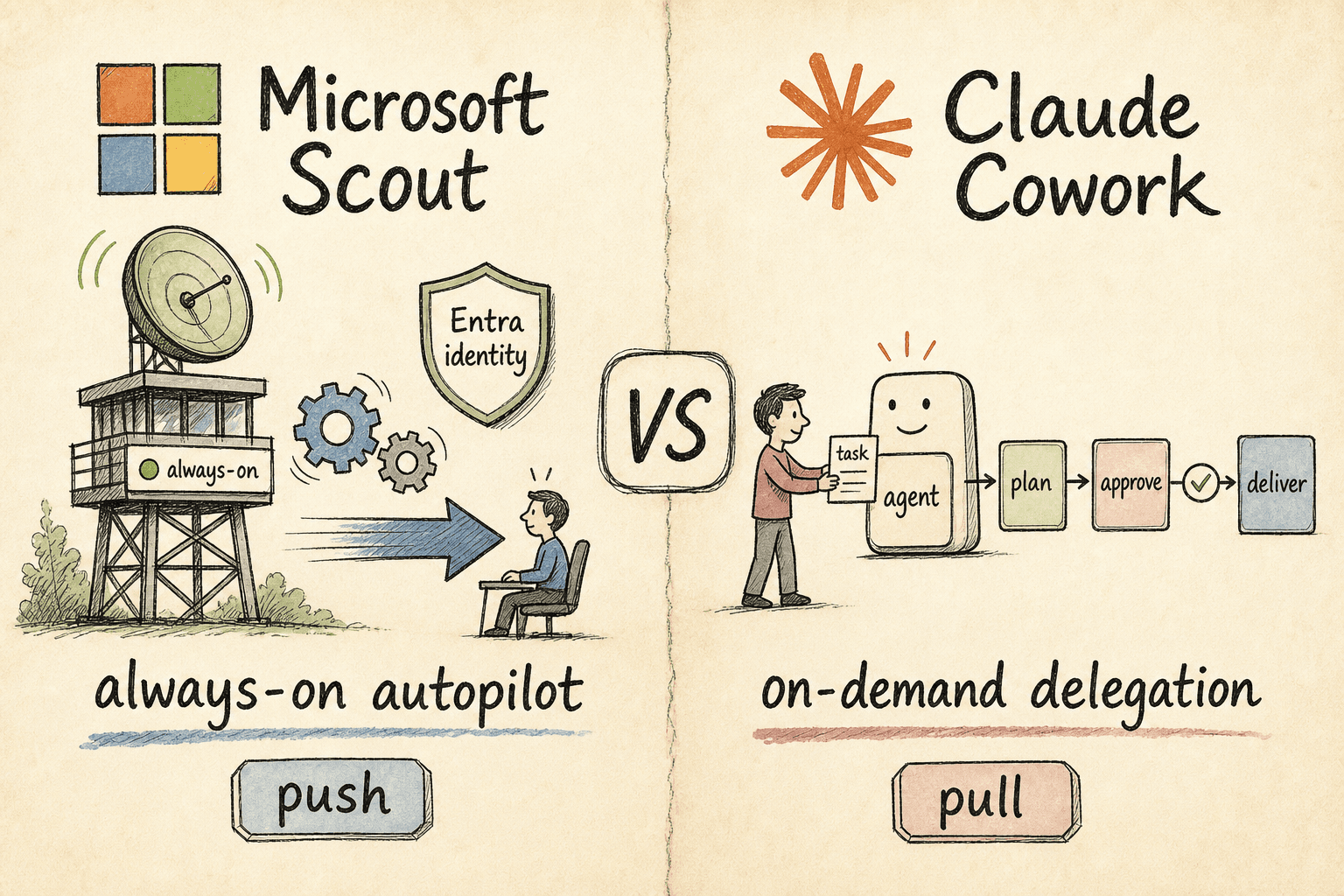
Microsoft Scout vs Claude Cowork: Autopilot or Delegation?
Two of 2026's biggest agent launches make opposite bets. Microsoft Scout is a desktop autopilot that runs in the background and acts on your behalf; Claude Cowork waits for you to hand it a task, then delivers. One is push, the other pull — here's which fits your team.