
Claude Managed Agents for Payroll Bureaus: What the Launch Means for UK Monthly Payroll Ops

Last updated: 9 April 2026
TL;DR
- Claude Managed Agents is infrastructure for governed, cloud-hosted agent workflows, not a payroll product.
- Payroll bureaus should aim it at recurring exception queues: late inputs, cut-off mismatches, messy source files, and structured handoffs.
- Final payroll calculation, statutory treatment, and sign-off still need human review; the value is repeatability, traceability, and coordination relief.
Key takeaway
Claude Managed Agents matters to payroll bureaus because monthly payroll work is recurring, deadline-bound, and full of exception queues. The launch suggests a stronger way to build governed agent workflows around that recurring admin, while keeping human review where payroll risk is real.
Claude Managed Agents is a new Claude Platform capability that lets teams build and deploy cloud-hosted agents with sandboxing, long-running sessions, and scoped permissions. For a UK payroll bureau, that matters most in the repetitive operational layer of monthly payroll: chasing late inputs, tracking cut-off exceptions, structuring messy source files, and handing reviewed outputs to payroll specialists on time. The short answer is simple: this launch suggests bureaus could build better governed recurring workflows for payroll operations, but it does not mean Anthropic shipped a payroll product or removed the need for human payroll review.
Why should a payroll bureau care about this launch?
Because payroll ops break under recurring deadline pressure, not because teams lack intelligence. A bureau serving care providers, recruiters, or multi-site employers often deals with the same monthly pattern: late timesheets, spreadsheet mismatches, last-minute starter and leaver changes, and exception work that piles up near cut-off. Managed Agents matters because Anthropic is positioning it as infrastructure for cloud-hosted agents that can run longer, operate inside governed permissions, and expose execution traces and tool calls for review. Anthropic's engineering write-up on Scaling Managed Agents is the clearest primary source on what that hosted runtime is trying to solve.
That combination is more relevant than generic AI hype. Production payroll workflows need repeatability, handoff quality, and a visible record of what the workflow actually did.
Can Managed Agents help with recurring payroll exception work?
Potentially, yes, if a bureau builds a tightly scoped workflow around approved tools and review gates. For example, a 14-person UK payroll bureau serving care homes might use one managed agent to gather approved monthly input files, another to flag missing or inconsistent data, and another to prepare a structured exception summary for the payroll lead before processing starts. Anthropic's launch language around sandboxing, scoped permissions, and execution tracing is what makes that operationally interesting.
Three grounded implications stand out:
- If you run the same monthly workflow against recurring deadlines, then long-running sessions can support a process that persists across the full cut-off window instead of restarting from scratch.
- If you need stronger governance over what an agent can access, then scoped permissions and secure sandboxing are the useful parts of the launch.
- If you need to review what happened before payroll sign-off, then execution tracing and Claude Console visibility matter more than flashy autonomy claims.
Does this mean payroll can run without human review?
No, and treating the launch that way would be reckless. Payroll is full of edge cases where employment status, statutory treatment, pension rules, and client-specific inputs still need accountable human review. Managed Agents looks relevant where the work is repetitive orchestration, exception routing, and structured handoff quality. It is not a shortcut around payroll controls. HMRC's guidance on keeping payroll records is a useful benchmark here: payroll processes still need accurate records, traceability, and accountable review.
That is the real takeaway for UK operators. The launch matters because it may reduce coordination drag in monthly payroll ops, especially when the same exception patterns recur every cycle. The win is not “AI does payroll now”. The win is that a bureau could build governed agent infrastructure around the messy recurring admin that slows payroll teams down.
Is this different from Claude Code or Claude Cowork?
Yes. Claude Code is for coding work, and Claude Cowork is a separate product focused on desktop-based autonomous knowledge work. Claude Managed Agents is the new launch focused on building and deploying cloud-hosted agent workflows with governance controls. If you are evaluating payroll use cases, start with the recurring exception queue, not the final payroll approval step.
If you want to map where managed agents fit inside your operations stack, explore our AI solutions, Cowork setup support, or talk to Marco.
Frequently Asked Questions

Founder, AI Heroes
I build AI companies and the systems inside them. At AI Heroes, we give businesses the functional capacity to grow without the headcount growth normally demands — sales that follows up, marketing that runs, content that ships, ops that handles itself. We audit where you're leaving growth on the table, build the team that captures it, and hand it over completely.
I've built at scale before. Leading product and GTM at SlideSpeak AI (1M+ monthly users, profitable, bootstrapped). CPO at Disperse — the AI construction platform that went from 3 to 200+ people on $35M raised. I also co-founded LOBOMAR, a luxury fashion label featured in Elle, Cosmopolitan, and the LA Times, with shows at the London Design Museum, Wereldmuseum, and Amsterdam Fashion Week.
Related Articles

Claude Cowork Enterprise Controls for Payroll Bureaus: What Changed on April 9
Claude Cowork's enterprise-readiness push matters for payroll bureaus because the work is recurring, sensitive, and full of exceptions. The practical question is where Cowork can reduce admin drag without weakening review control.

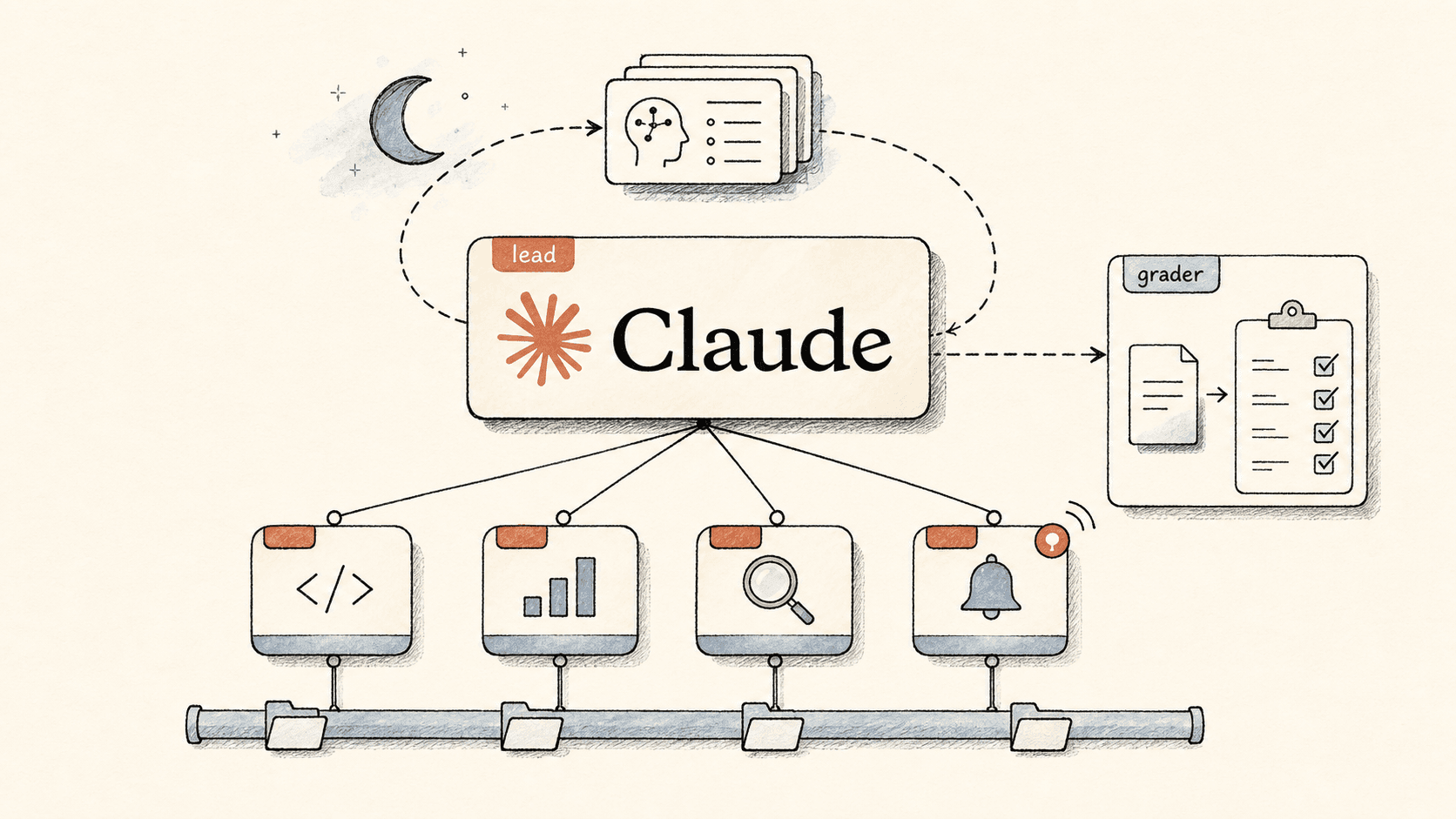
How Claude Managed Agents Actually Work: Dreaming, Outcomes, Multiagent Orchestration, and Webhooks (2026)
Anthropic gave Claude Managed Agents four new mechanics at Code w/ Claude: Dreaming, Outcomes, Multiagent Orchestration, and Webhooks. The one that changes how you build is Outcomes — a separate grader that loops the agent until a rubric is met. Here is how each one works, and when to reach for it.

Claude Managed Agents for Insurance Brokerages: What the New Launch Means for Renewal Workflows
Claude Managed Agents is Anthropic's new cloud-hosted agent capability. For UK insurance brokerages, the useful question is not whether AI can replace broking judgement, but whether it can remove the renewal admin drag that slows handlers down.