
How Influencer Agencies Use Claude Cowork to Manage Creator Briefs

Influencer campaign operations
Cleaner handoffs and fewer missed approval details.
Creator briefs, approvals, proofs, and reporting evidence are spread across tools and folders.
A Cowork workflow for briefing assembly, checklist creation, approval evidence, and campaign reporting.
Last updated: April 17, 2026
Key takeaway
Creator briefing with Claude Cowork means turning campaign instructions, brand rules, approval status, proof files, and reporting notes from scattered tools into a review-ready working pack for the agency team.
For Claude Cowork influencer campaign briefs, the useful question is not whether AI can invent creator strategy. It should not. The useful question is whether Cowork can help an agency keep briefing, approval, evidence, and reporting admin from falling apart across files and channels.
Anthropic describes Claude Cowork as a way to delegate knowledge work against selected folders, files, connectors, and computer workflows. It also says users choose what Claude can access and that Claude asks before significant actions. That is the right posture for influencer campaign operations: Cowork prepares the work, humans approve the work.
The agency scenario
A 24-person influencer agency in Cologne, London, or New York coordinates creator briefs, approvals, proofs, and campaign reports for retail and consumer-service brands. The team loses time because brand instructions live in one document, creator notes in another, approvals in email, screenshots in folders, and campaign metrics in a spreadsheet.
The account manager does not need a generic chatbot. They need a briefing assistant that can read the campaign folder, compare drafts against brand rules, list missing approvals, and produce a clean handoff before content goes live.
How Cowork helps
Start with one campaign folder. Add the brand guide, creator list, draft briefs, approval tracker, screenshot folder, reporting template, and any client-specific rules. Ask Cowork to prepare a campaign briefing pack with five sections: campaign objective, creator-specific instructions, required disclosures, missing assets, and approval status.
Cowork can read documents, images, spreadsheets, and presentations. It can use connectors where available and Computer Use where the work sits inside browser tools. If the account manager is away from the desk, Dispatch can kick off preparation from mobile and leave the result for review.
The output should be a checklist and briefing draft, not a final legal or client approval. That distinction keeps the workflow useful and controlled.
If-then patterns worth using
If creator approvals are split across channels, then Cowork can turn relevant messages and files into a single approval checklist.
If a brand requires specific wording or usage rights language, then Cowork can flag briefs or drafts that appear to miss those requirements.
If campaign evidence arrives as screenshots, then Cowork can categorize the images and flag quality issues before reporting.
If an account manager is travelling, then Dispatch can start the prep and leave the briefing pack ready for later review.
What stays human
The agency still owns creator selection, legal interpretation, brand judgement, relationship management, and final approval. Cowork should not send sensitive creator or client communications without review. It should not decide whether a disclosure is legally sufficient. It should not replace an experienced account lead.
The value is operational: cleaner handoffs, fewer missed approval details, and faster campaign reporting prep. For influencer teams, that is often where margin disappears.
If your agency wants to structure creator-briefing operations, explore AI solutions, see Cowork setup, or talk to Marco.
Sources
Frequently Asked Questions

Founder, AI Heroes
I build AI companies and the systems inside them. At AI Heroes, we give businesses the functional capacity to grow without the headcount growth normally demands — sales that follows up, marketing that runs, content that ships, ops that handles itself. We audit where you're leaving growth on the table, build the team that captures it, and hand it over completely.
I've built at scale before. Leading product and GTM at SlideSpeak AI (1M+ monthly users, profitable, bootstrapped). CPO at Disperse — the AI construction platform that went from 3 to 200+ people on $35M raised. I also co-founded LOBOMAR, a luxury fashion label featured in Elle, Cosmopolitan, and the LA Times, with shows at the London Design Museum, Wereldmuseum, and Amsterdam Fashion Week.
Related Articles
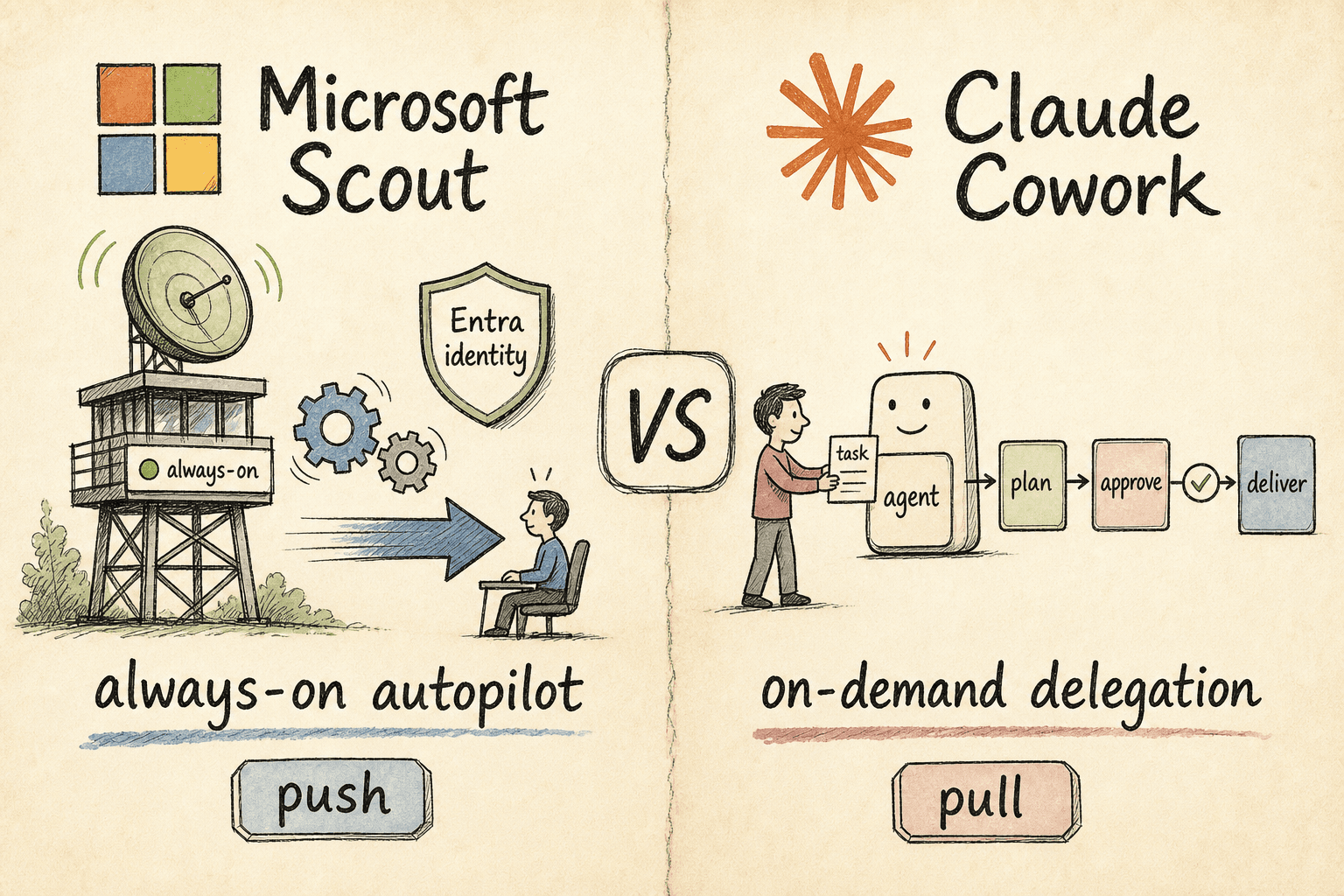
Microsoft Scout vs Claude Cowork: Autopilot or Delegation?
Two of 2026's biggest agent launches make opposite bets. Microsoft Scout is a desktop autopilot that runs in the background and acts on your behalf; Claude Cowork waits for you to hand it a task, then delivers. One is push, the other pull — here's which fits your team.

How to Get Started with Claude Cowork: A Decision Framework for Knowledge Workers (2026)
Claude Cowork is where you delegate a whole task instead of asking a question — point it at your files and apps, describe the outcome, get finished work. The hard part isn't the prompt, it's knowing which tasks to hand it. Here's a 5-signal fit test, the three shapes a Cowork task can take, and how to get your first deliverable in ten minutes.
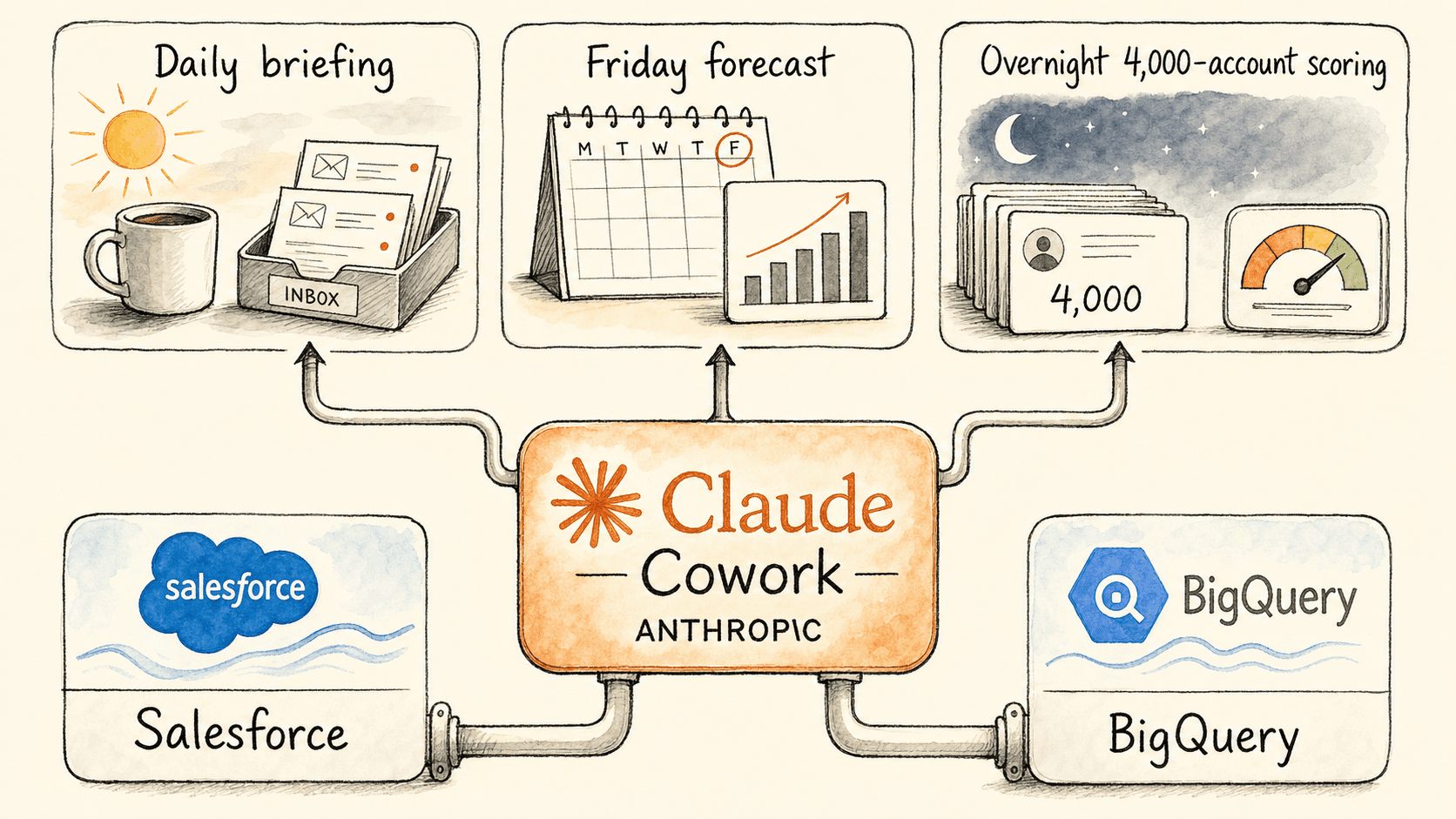
Anthropic's Sales Team on Claude Cowork: An AI-Augmented Sales Operations Layer in Practice
Travis Bryant, Head of US Mid-Market GTM at Anthropic, runs a 4,000-account book using Claude Cowork as the AI-augmented sales operations layer on top of Salesforce and BigQuery. Daily call prep, Friday forecast rollup in leadership's expected format, and overnight territory scoring that used to take hundreds of hours. The lesson is the architecture, not the chat — what an AI-augmented sales operations layer actually looks like when the CRM stays the system of record.