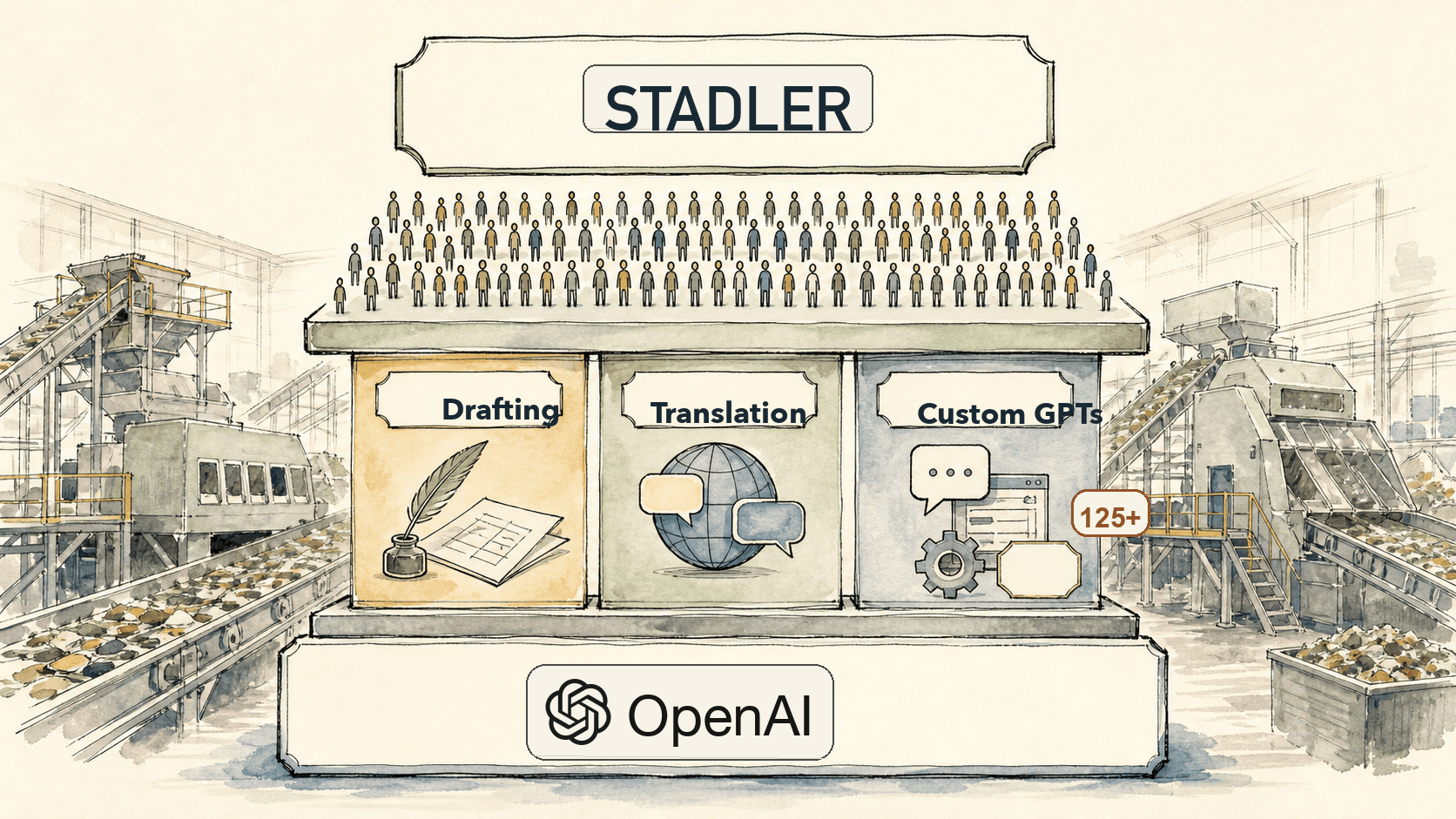
What STADLER's ChatGPT Rollout Teaches About Industrial AI Adoption

TL;DR
- STADLER's ChatGPT rollout is a real industrial adoption case, not a moonshot: a 230-year-old waste-sorting plant manufacturer with 650 employees built >85% daily active usage of a horizontal LLM by treating AI as a company-wide productivity layer, not a department experiment. The numbers — 30-40% time savings, 2.5x faster first drafts, 125+ custom GPTs — only make sense if you read the operating pattern underneath them.
- The pattern that worked is bottom-up plus top-down plus custom GPTs: leadership granted company-wide access, training, and clear guardrails, employees explored use cases, and the workflows that proved themselves were captured as custom GPTs so the next person to run the same task started from a sharper first draft. That is the missing implementation layer most enterprise AI rollouts skip.
- At AI Heroes, we treat this as the playbook for industrial and regulated-mid-market AI adoption: name the workflows, name the owners, capture the institutional judgment as reusable skills or custom GPTs, and only widen access once the first wave of workflows has survived everyday work. The technology choice — ChatGPT, Claude, Gemini, or another — comes after the operating layer is designed.
OpenAI's STADLER customer story is one of the most useful enterprise AI case studies of 2026, because it does not need to invent anything. A family-owned manufacturer with 230 years of history put ChatGPT in front of its workforce, kept the rollout disciplined, and ended up with daily active usage above 85% across the company.
That headline number is the easy part to quote. The harder part is what it tells you about how industrial and mid-market businesses actually adopt AI when they are serious about it. STADLER did not buy a custom platform. They did not run a heroic six-month transformation programme. They built an industrial AI adoption layer around a horizontal product and let the workforce do most of the implementation work.
This article reads the STADLER story through that implementation lens. It is the layer we care about at AI Heroes, because the model is rarely the constraint anymore. The constraint is whether the company has a real adoption pattern, or just a procurement decision.
What did STADLER actually build with OpenAI's ChatGPT?
STADLER embedded ChatGPT across nearly every function of a 650-person waste-sorting plant manufacturer and built more than 125 custom GPTs to capture the workflows that proved themselves, with engineering, project management, marketing, and IT all using it daily.
The official numbers from OpenAI's case study are straightforward: 30-40% time savings on common knowledge tasks such as summarising and documentation, a 2.5x improvement in time to first draft on average with up to 6x acceleration on high-volume use cases like social media, and greater than 85% daily active usage with employees engaging multiple times per day. Co-CEO Julia Stadler describes the change in concrete terms: tasks that used to need half a day for a decent first version now produce a solid draft in about 20 minutes, with the rest of the time spent on refinement.
Three things stand out for an implementation partner. First, the deployment is horizontal — ChatGPT is the same product everyone uses, not a bespoke tool per department. Second, the customisation lives in custom GPTs, not in model fine-tuning. Third, the strongest adoption pockets are translation and email workflows, which is exactly what you would predict for a multinational manufacturer whose engineers and project managers spend significant time turning technical English or German content into clear cross-team communication.
This is the part of the story we focus on with industrial clients: ChatGPT was the surface. The operating layer — who uses it for what, which workflows are worth wrapping in a custom GPT, what guardrails apply — is what produced the >85% daily active number.
Why is the STADLER case important for industrial and mid-market AI buyers?
The STADLER case is important because it shows a regulated-mid-market industrial company hitting enterprise-grade AI adoption metrics without rebuilding its business around AI, which is the opposite of what most "AI transformation" narratives in heavy industry suggest.
A 230-year-old manufacturer is not the audience that AI vendors typically demo to first. The buyer profile sits in the awkward middle: too small to fund a full data-science programme, too large to run on personal subscriptions, regulated enough that procurement asks hard questions, technical enough that engineers and process specialists already have strong opinions, and committed enough to its physical product that no chief executive wants to bet the company on a chatbot.
That buyer profile has been waiting for a defensible case study. The STADLER numbers — daily active usage, time to first draft, custom GPT count — are credible because they map onto work that any 650-person industrial firm recognises: writing technical documentation, summarising operational reports, translating between markets, drafting customer and supplier emails, structuring projects, and turning expert knowledge into transferable artifacts.
The signal is not "AI is magic in manufacturing". The signal is that a horizontal LLM, properly adopted, can move the productivity floor of an industrial company by a measurable amount without disrupting the physical work it actually does. That is the threshold a lot of European mid-market boards are sitting at right now.
What is an industrial AI adoption layer, and why does STADLER's rollout need one?
An industrial AI adoption layer is the operating layer that sits between a horizontal AI product and a regulated industrial workforce — the named workflows, role-specific custom GPTs, training, guardrails, and review habits that turn "everyone has access" into "everyone uses it well". STADLER's rollout works because that layer exists, even if the case study describes it informally.
You can see the layer in the way OpenAI describes the rollout: bottom-up experimentation combined with top-down support. Employees were encouraged to explore use cases. Leadership provided company-wide access, training, and clear guardrails. The 125+ custom GPTs are the artifacts that resulted — frozen versions of workflows that proved themselves enough to be reused. That sequence is the layer.
| Industrial AI adoption layer component | What it does at STADLER | What it should do in any 200-2,000-person industrial firm |
|---|---|---|
| Company-wide access | All 650 employees can use ChatGPT, removing the "only some teams have it" failure mode. | Buy one enterprise tier, document acceptable use, and remove the procurement excuse for shadow accounts. |
| Bottom-up exploration | Engineering, project teams, marketing, and operations identify their own use cases. | Time-box weekly use-case sharing so good workflows surface before they get stuck in one person's head. |
| Top-down training and guardrails | Leadership provides training and clear rules so adoption is not random. | Publish a short usage charter, name the prohibited inputs, and budget time for role-specific training. |
| Custom GPTs | 125+ custom GPTs capture the workflows that earned reuse, especially in translation and email. | Standardise a custom GPT review process: who can publish one, what counts as approved data, how it gets retired. |
| Workflow ownership | Each function (engineering, project management, marketing, IT) has its own usage pattern. | Assign a workflow owner per function so the rollout has a named human, not just an admin. |
| Daily-use measurement | >85% daily active usage tells leadership the layer is real, not theatrical. | Track daily active usage, custom GPT reuse, and accepted-output rate from week one. |
The layer is mostly organisational, not technical. The technology underneath could be ChatGPT, Claude, Gemini, or any other production-grade LLM. The thing that determines whether the rollout reaches STADLER's numbers is whether someone built and maintained the layer.
This is the AI Heroes specialty, and the reason we are publishing this article. We build that layer for clients. It is the work that does not show up in a model demo and is the only reason model demos translate into operating leverage.
How does the STADLER ChatGPT rollout compare to typical enterprise AI rollouts?
The STADLER rollout differs from typical enterprise AI rollouts in three measurable ways: it is horizontal rather than department-first, it captures workflows as custom GPTs instead of leaving them as private prompts, and it measures daily active usage as a leading indicator of adoption rather than relying on vague productivity surveys.
Most enterprise AI rollouts start with a department or use case, generate an early win, then stall as procurement, IT, security, and change-management catch up. The STADLER pattern inverts that sequence. Access goes wide first, leadership provides guardrails and training, employees experiment, and the best experiments are frozen into custom GPTs that anyone can reuse. The result is a population-level adoption curve instead of a project-level demo.
| Dimension | Typical enterprise AI rollout | STADLER pattern from the case study | Implication for the next buyer |
|---|---|---|---|
| Entry point | Pilot in one department (often marketing, support, or IT). | Horizontal company-wide access from day one with guardrails. | Wider access shortens the path from experiment to reusable workflow if guardrails and training are real. |
| Customisation strategy | Fine-tuned models, custom platforms, or bespoke wrappers. | Custom GPTs built on top of ChatGPT (125+ of them). | Workflow-level customisation is faster than model-level customisation and easier to retire. |
| Adoption measurement | Headline productivity surveys, anecdotal wins. | Daily active usage above 85% as the proof point. | Daily active usage is a stronger leading indicator than satisfaction scores. |
| Role of leadership | Sponsorship and budget, often distant from daily work. | Co-CEO and Head of IT named in the case study with operational quotes. | Visible executive involvement correlates with sustained adoption. |
| Knowledge capture | Lives in chat history and individual experts. | Captured as custom GPTs, especially in translation and email workflows. | Custom GPTs convert one-off wins into shared infrastructure. |
| Next phase | More tools, more dashboards. | AI agents that gather information, generate outputs, validate against standards, and route work for approval. | Agentic execution is the natural next step, but only after horizontal adoption is real. |
The STADLER pattern is not the only way to run an enterprise AI rollout. It is, however, a credible blueprint for industrial and regulated-mid-market companies that need to move quickly without committing to a multi-year platform programme.
What lessons does the STADLER case give to mid-market manufacturers in Europe?
The biggest lesson is that AI adoption is a management problem first and a technology problem second, and that a horizontal product like ChatGPT, with the right adoption layer, can deliver enterprise-grade results inside a 230-year-old industrial business without disrupting the physical work it actually does.
Four specific lessons follow from the case study. First, leadership commitment is concrete, not rhetorical. Co-CEO Julia Stadler frames the principle that every employee working on a computer should use AI. That maps to a budget line, a training plan, and a default for new hires. The OECD's 2025 SME AI adoption work is clear that the gap between large and small firm adoption is driven less by technology access than by skills, strategic clarity, and workflow integration — exactly the three places STADLER's leadership chose to invest.
Second, the company treats translation, drafting, and summarisation as the productivity floor, not as superficial tasks. For a company operating across European markets, that floor is enormous, and so is the saved hour count.
Third, STADLER explicitly names the next step: AI agents that gather information, generate outputs, validate against standards, and route work for approval. That is the right ordering. Horizontal adoption first, agentic execution second. Trying to skip the first step is the most reliable way to ship an AI agent that nobody uses.
Fourth, the rollout does not require the business to become a "tech company". STADLER still designs and builds physical waste-sorting plants. The AI layer adds capacity around that core, rather than competing with it.
How would AI Heroes implement a similar rollout?
We would implement a similar rollout in four phases over roughly 90 days, with each phase ending in evidence that the next phase deserves to start. The aim is to get to STADLER-style numbers — high daily active usage, dozens of named workflows captured as reusable artifacts, measurable time savings — without spending a year on platform theatre.
In the first phase, days 1-15, we audit the company's recurring knowledge work and map it to workflow zones: drafting, summarising, translating, structuring, deciding, routing. We pick three high-frequency workflows per zone, write a one-page operating brief for each, and name the owner. We agree the guardrails: prohibited inputs, approved data classes, review thresholds, escalation path. The AI product — ChatGPT, Claude, Gemini — is chosen on the workflow mix and existing software estate, not on a model league table.
In the second phase, days 15-45, we run the workflows live with a pilot group of 30-60 people. We capture the strongest reusable patterns as custom GPTs or skills, depending on the platform. We measure daily active usage, accepted output rate, and rework rate weekly. We hold a weekly use-case share where employees show each other what worked, because that is how STADLER ended up with 125+ custom GPTs without commissioning them centrally.
In the third phase, days 45-75, we widen access to the rest of the company. We publish the first version of an internal AI usage charter. We make workflow owners responsible for their workflow's quality drift, like a piece of internal documentation. We connect the AI to the right systems — email, document storage, ticketing — using approved connectors, not screen-scraping. We start logging incidents and reviewing them weekly.
In the fourth phase, days 75-90, we move the company into the execution layer STADLER describes next: agentic workflows that gather inputs, generate outputs, validate against standards, and route for approval. We do this on the workflows that already have high daily active usage and a stable owner. Anything else stays at the assistance layer.
This is the work most companies skip on the way from "we have ChatGPT" to ">85% of our people use it every day and we have 125+ custom GPTs holding our actual ways of working".
What is the right next step if you want STADLER-style results inside your own business?
The right next step is to decide honestly whether your business has an adoption layer, or only a license. If the honest answer is "we bought seats and hoped", you do not have an implementation problem yet — you have a design problem.
The STADLER numbers are not the goal. The goal is whatever the equivalent of >85% daily active usage looks like inside your company, weighted by the work that actually drives revenue, retention, safety, or customer outcomes. For a payroll bureau, it is fewer hours per pay run. For a law firm, it is faster turnaround on commercial lease reviews. For a recycling plant manufacturer, it is more capacity per knowledge worker without lowering quality.
What stays constant is the layer underneath. Named workflows. Workflow owners. Custom GPTs or skills that capture how your company decides things. Training and guardrails that respect the regulated context. A weekly review cadence so the system improves instead of drifts. Executive sponsorship that is visible in operating decisions, not just in town hall slides.
That is the layer we build at AI Heroes. If you want it built for your business — particularly an industrial, manufacturing, or regulated mid-market business in Europe — the next step is a short conversation about which workflows are the right starting set and what your real success metric looks like at 90 days.
Authoritative sources
- OpenAI: STADLER reshapes knowledge work at a 230-year-old company
- OpenAI: ChatGPT for Business
- OpenAI: Introducing ChatGPT Enterprise
- Anthropic: Building AI agents for the enterprise
- OECD: AI adoption by small and medium-sized enterprises (2025)
- Model Context Protocol: Getting started
Related reading
- Building AI agents for the enterprise: implementation patterns for 2026
- The Founder's Playbook, implemented: a 90-day Claude rollout guide
- Claude skills and agent workflows: why prompts are not enough
- AI agent workflow automation: from chat to repeatable workflow
- AI institutional knowledge: how a company remembers what it has learned
- Microsoft Copilot Cowork vs Claude Cowork: which AI work surface is right for you?
- AI Heroes AI solutions for businesses
The agent built for this

Richard
A forward-deployed AI agent that gets your software live and adopted inside every customer.
Meet RichardFrequently Asked Questions

Founder, AI Heroes
I build AI companies and the systems inside them. At AI Heroes, we give businesses the functional capacity to grow without the headcount growth normally demands — sales that follows up, marketing that runs, content that ships, ops that handles itself. We audit where you're leaving growth on the table, build the team that captures it, and hand it over completely.
I've built at scale before. Leading product and GTM at SlideSpeak AI (1M+ monthly users, profitable, bootstrapped). CPO at Disperse — the AI construction platform that went from 3 to 200+ people on $35M raised. I also co-founded LOBOMAR, a luxury fashion label featured in Elle, Cosmopolitan, and the LA Times, with shows at the London Design Museum, Wereldmuseum, and Amsterdam Fashion Week.
Related Articles
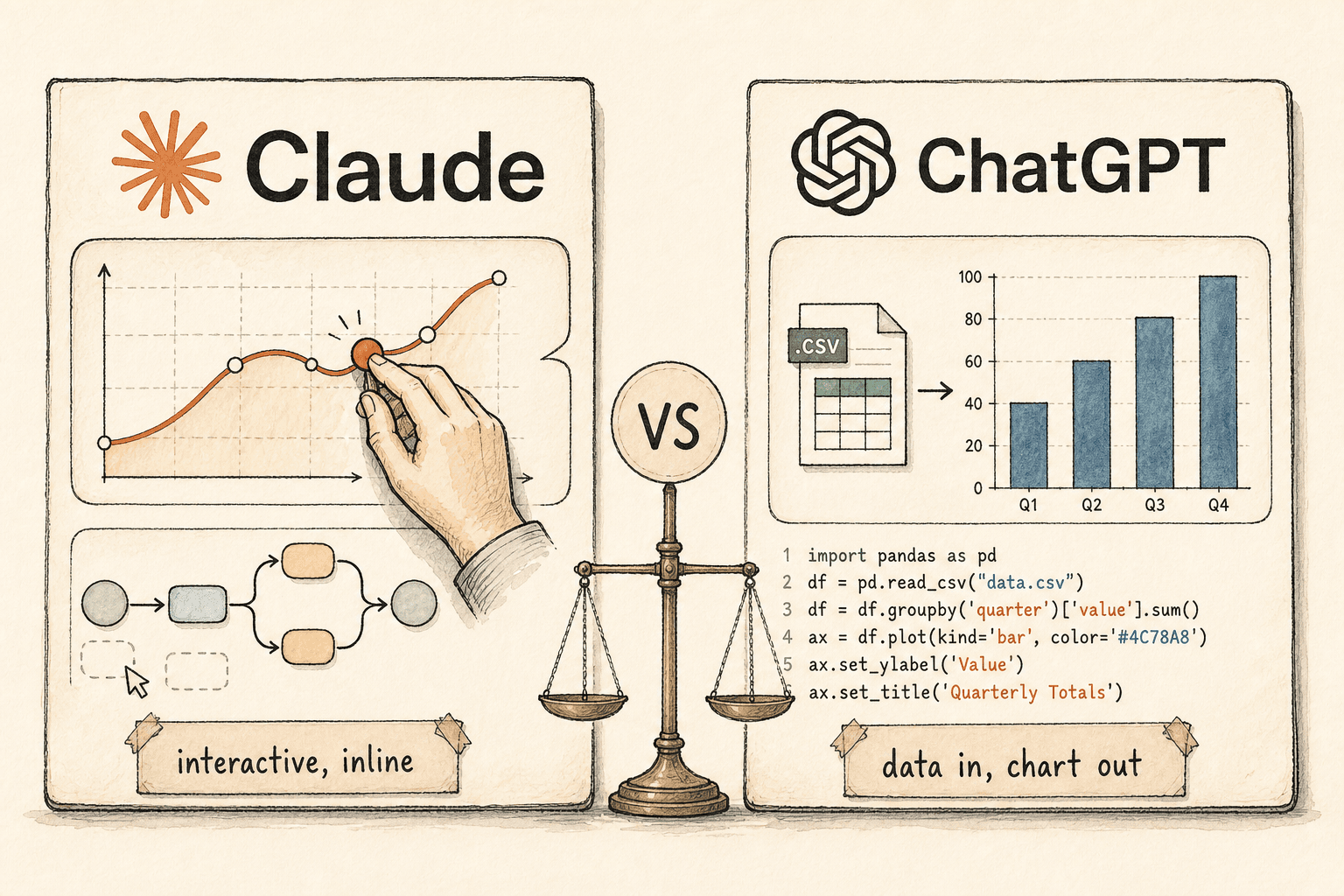
Claude vs ChatGPT for Charts, Diagrams & Visualizations: Which One Should You Use in 2026?
Upload a dataset and need a precise, downloadable chart with the code shown? That's ChatGPT. Want a visual you can poke at, iterate on in conversation, or ship as a shareable interactive tool? That's Claude. The full comparison — capabilities, plans, and where each one quietly loses.


What Is Claude Tag? How Anthropic's Slack AI Teammate Works (2026)
Anthropic launched Claude Tag on 23 June 2026: a way to work with Claude inside Slack as a shared, always-on teammate. Tag @Claude and it plans a task, uses the tools you grant it, and replies in-thread. It is multiplayer, learns from the channel, can take initiative, and works asynchronously over hours or days. It runs on Opus 4.8, is in beta for Enterprise and Team, and replaces the old Claude in Slack app.
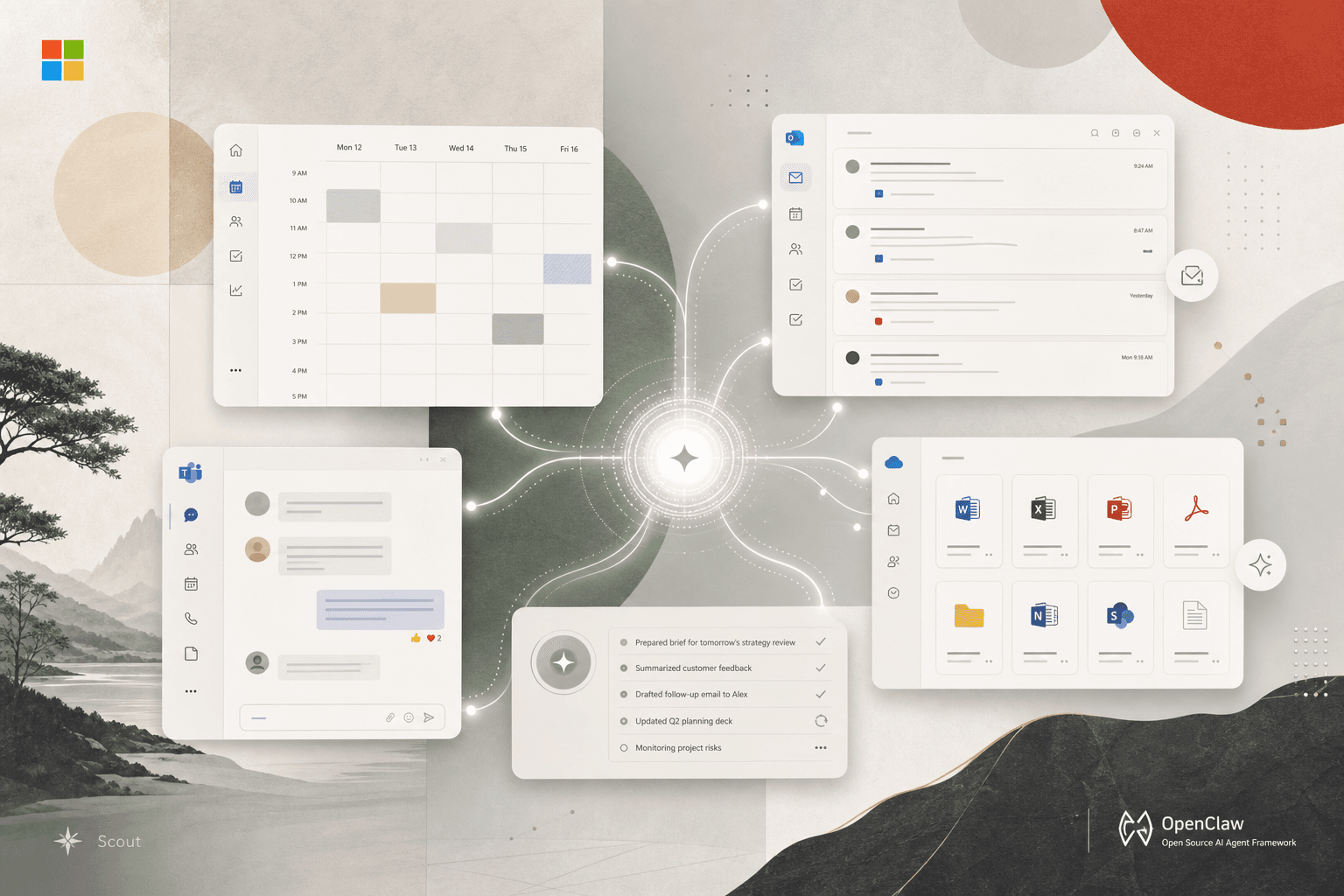
Microsoft Scout, Explained: The Always-On 'Autopilot' Built on OpenClaw
Microsoft Scout is the first of a new category Microsoft calls 'Autopilots' — a Windows and macOS desktop agent that acts on your files, shell, browser and Microsoft 365, and works autonomously in the background. Here's what's actually confirmed, what isn't, how to get it, and why it's built on the open-source OpenClaw framework.